ATLANTA – College students needing a financial boost to complete their degrees would get help from the state under legislation the Georgia House of Representatives passed Tuesday.
Lawmakers voted 171-3 let students who have earned at least 80% of the credits required for the degree they are seeking receive a grant of up to $2,500 to help pay their tuition.
The money would help plug a “small gap to get [students] across the finish line,” said House Higher Education Committee Chairman Chuck Martin, R-Alpharetta, the bill’s chief sponsor.
“Higher education changes life,” added Rep. Stacey Evans, D-Atlanta. “The more kids we can get in our educational system, the better they’re going to be and their families are going to be.”
To qualify, students would have to complete a Free Application for Federal Student Aid (FAFSA) application.
The Georgia Student Finance Commission would administer the grant program, subject to state appropriations. The bill would have a sunset date of June 30, 2025, to give lawmakers a chance to determine whether the program is working.
The bill now moves to the state Senate.
This story is available through a news partnership with Capitol Beat News Service, a project of the Georgia Press Educational Foundation.
ATLANTA – Georgia lawmakers may be about to start over the state’s long-delayed medical marijuana program.
A state House committee approved legislation Monday that would cancel the current program and authorize a new request for proposals (RFP) from companies interested in growing marijuana in Georgia and converting the leafy crop into low-THC oil for eligible patients.
Also Monday, a committee in the Georgia Senate approved a bill aimed at moving the current program forward by restarting the evaluation of companies that already have bid for state licenses.
The General Assembly legalized possession of cannabis oil in 2015 but gave Georgians no way to obtain the drug. In 2019, lawmakers created a state commission to oversee the growth of marijuana and the production and sale of cannabis oil.
The commission awarded licenses to six companies last July. But companies whose bids were denied complained about the licensing process and filed legal protests that have kept the program from getting off the ground.
“We’ve got patients we’ve been trying to get [cannabis] oil to for at least four years,” Rep. Bill Werkhiser, R-Glennville, the House bill’s chief sponsor, told members of the House Judiciary Committee.
Under House Bill 1425, the state Department of Administrative Services would oversee the RFP in partnership with an independent third party. Licenses evaluated during the RFP process would have to be issued by the end of December.
The bill also would expand the number of licenses by two for every increase of 50,000 patients on the state registry to receive cannabis oil. There are currently about 20,000 Georgians on the registry, which includes patients suffering from a variety of diseases.
The bill could reach the House floor for a vote as early as Tuesday, the Crossover Day deadline for bills to pass at least one legislative chamber to remain alive this year.
Meanwhile, Senate Bill 609 also is due for a floor vote on Tuesday. The Senate legislation, sponsored by Sen. Jeff Mullis, R-Chickamauga, contains the same provision for expanding the number of licenses as more Georgians are added to the cannabis oil registry.
However, rather than put out a new RFP, the Senate bill would instruct the commission to review the licenses that already have been awarded and the protests that have been filed, then issue six licenses to the “highest qualified applicants.” The commission would be given a deadline of July 1.
This story is available through a news partnership with Capitol Beat News Service, a project of the Georgia Press Educational Foundation.
ATLANTA – After years of nibbling around the edges of regulations governing how Georgia hospitals operate, the General Assembly may decide to scrap the Certificate of Need (CON) law altogether.
A state House committee approved legislation late last week that would repeal CON by 2025. It could hit the House floor on Tuesday, the Crossover Day deadline for bills to pass at least one legislative chamber to remain alive for the year.
The 1979 CON law requires applicants wishing to build a new medical facility or provide new health-care services in Georgia to show it is needed in their communities. It was enacted to comply with a federal mandate aimed at reducing health-care costs by avoiding duplication.
Instead, the law has increased the costs of care by stifling competition, House Majority Whip Matt Hatchett, R-Dublin, the bill’s chief sponsor, told members of the House Special Committee on Access to Quality Health Care.
“We’ve allowed our large hospitals to become monopolies in their communities and continue to raise prices,” he said. “The large hospitals get larger, and our small hospitals continue to struggle to survive.”
The General Assembly has reformed the CON law over the years. In 2008, lawmakers exempted physician-owned ambulatory surgery centers with a single specialty from having to obtain a CON.
In 2013, the legislature limited the filing of objections to CON applications to existing hospitals within 35 miles of a new facility seeking a certificate of need.
House Bill 1547 would repeal CON as of Jan. 1, 2025, and replace it with a licensing program with the same indigent care requirements that now apply to CON applicants.
During the two years leading up to the repeal taking effect, the legislation would give multiple-specialty surgery centers the same exemption now provided single-specialty centers.
It also would limit cash reserves nonprofit hospitals would be allowed to maintain and create a new state program to aid uninsured mental health patients.
Opposition to the bill is led by organizations representing Georgia hospitals.
Monty Veazey, president and CEO of the Tifton-based Georgia Alliance of Community Hospitals, said repealing the CON law would devastate an industry already struggling to emerge from COVID-19 and saddled with a severe shortage of health-care workers, particularly nurses.
“This bill comes at the worst time for us,” he said. “Across the state, hospitals are losing millions of dollars. … When you repeal CON and allow ASCs (ambulatory surgery centers) to proliferate, it just draws paying patients from hospitals.”
Some committee members argued the CON law needs reforming but shouldn’t be repealed.
“I don’t think the answer to the CON issue is to totally eliminate it,” said Rep. Butch Parrish, R-Swainsboro.
But Rep. Sharon Cooper, R-Marietta, said the years of opposition the hospital industry and its hired lobbyists have mounted to reforming CON have convinced some lawmakers it’s time to scrap the process.
“Any time you try to get even minor changes, the answer is always, ‘No,’ ” she said. “That’s the frustration all of us are feeling. … I’m sick of it.”
This story is available through a news partnership with Capitol Beat News Service, a project of the Georgia Press Educational Foundation.
ATLANTA – Former Atlanta Mayor and business leader Sam Massell died Sunday at the age of 94.
Massell, who led the city from 1970 through 1974, was Atlanta’s first and only Jewish mayor and the city’s last white mayor.
Later, he founded the Buckhead Coalition, a business group, and headed it for more than 30 years.
Massell was known as a champion of collaboration and inclusion, said Andre Dickens, Atlanta’s current mayor, who put Massell on his transition team after Dickens was elected late last year.
“He paved the way for better representation of women and minority participation in city government,” Dickens said. “Sam always said that we can get more done through a conference call than through confrontation.”
Massell also played a key role in bringing heavy rail transit to Atlanta.
“MARTA would not exist but for the dedication and persistence of Massell, who convinced the Georgia legislature – and later voters – to approve the local-option sales tax the continues to fund MARTA to this day,” MARTA officials wrote in a statement. “MARTA was fortunate to have such an ardent supporter, and we remain forever in his debt.”
This story is available through a news partnership with Capitol Beat News Service, a project of the Georgia Press Educational Foundation.
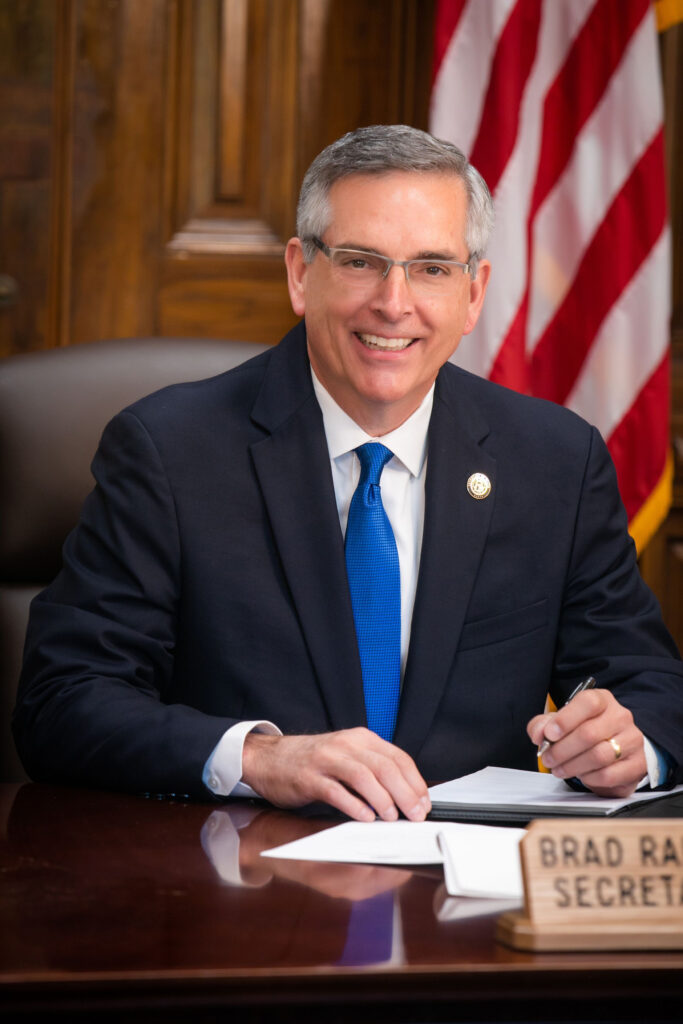
ATLANTA – The Georgia Secretary of State’s office has received a clean audit on its spending of grant funds received through the federal Help America Vote Act (HAVA).
However, an audit the state Department of Audits & Accounts released Friday showed that almost half of the grant transactions examined had at least one noncompliance issue related to state purchasing requirements.
The state received $34.8 million in HAVA grants between fiscal year 2018 and fiscal 2021. The largest portion of the expenditures – 33% – went toward communications and media services.
While the expenditures were for goods and services generally allowed by the program, the department did not participate in the state purchasing-card program about 100 other state agencies use.
Instead, the department reimbursed employees for non-travel business expenses paid with personal credit cards, according to the audit, which was requested by the state House Appropriations Committee.
“Unlike the state p-card program, outside credit cards are not subject to the same system of controls used across state government to detect and deter fraud, misuse, and abuse,” according to the audit.
The audit also revealed the office’s chief operating and chief financial officer was hired as a consultant while still employed with the secretary of state, potentially a violation of state law.
The office did not provide the documentation federal grants require for 12% of the transactions examined. In most cases, the documentation the agency did provide was insufficient for determining whether the purchase was “consistent with allowed grant uses.” Secretary of State Brad Raffensperger’s response to the audit focused on the finding that no fraud occurred.
“My main goal has always been to uphold the integrity of Georgia’s elections,” he said. “The audit requested by the Georgia legislature demonstrated once and for all that my office used federal funds for appropriate purposes.”
The audit found that nearly 90% of the grant funds had been spent as of the end of last June. Nearly $7 million of the federal money remained.
This story is available through a news partnership with Capitol Beat News Service, a project of the Georgia Press Educational Foundation.