ATLANTA – Two think tanks that have long been fixtures under the Gold Dome have reached dramatically different conclusions about a proposed $1 billion state tax cut before the General Assembly.
The Georgia Public Policy Foundation (GPPF) says the legislation, which the state House of Representatives passed March 9, would create tens of thousands of jobs and put more money in the wallets of a broad range of taxpayers.
The Georgia Budget and Policy Institute (GBPI) says most of the benefits would go to upper-income Georgians, while slashing tax revenues would threaten state funding of public education and health care.
The bill would set Georgia’s income tax rate at a flat 5.25%, down from 5.75%. It would eliminate the current standard deduction and replace it with a larger “standard exemption” of of $12,000 for single filers and $24,000 for married couples filing jointly.
House Bill 1437 also would eliminate most other deductions, with the exception of charitable contributions. The legislation would take effect Jan. 1, 2024.
The bill is the next step in reducing state income taxes the Republican-controlled legislature began after Congress passed federal tax reform in 2017. The General Assembly lowered Georgia’s income tax rate from 6% to 5.75% in 2018.
Lawmakers haven’t followed through with additional tax relief until now because of fears the state’s finances would plummet during the coronavirus pandemic. Instead, tax revenues have been on the rise, leading to this year’s push for another tax cut.
Reducing taxes by $1 billion would create more than 21,000 jobs in Georgia within five years of the bill taking effect, according to projections by the Beacon Hill Institute, a Massachusetts-based economics research organization the GPPF retained to analyze the legislation.
During that same period, the tax cut would generate $1.3 billion in economic impact, including $504 million in new investment. In addition, Georgians would have almost $2.4 billion more in disposable income, Beacon Hill found.
“Because of the reduction of the state’s top income-tax rate and the elimination of tax brackets, the reward for increased work and saving would rise, motivating investment and economic growth,” study co-authors David Tuerck and William Burke concluded.
Kyle Wingfield, president and CEO of the GPPF, which advocates free-market approaches to public policy, said the projected impacts of the tax cut are in keeping with the foundation’s philosophy.
“We’ve always been for broadening the tax base, getting rid of as many tax break incentives as we can and having a lower rate for everybody,” he said.
But an analysis by the progressive-leaning GBPI found that $620 million of the $1 billion tax cut would go to Georgians in the top 20% – earning more than $109,000 a year.
Only 62% of taxpayers would get a tax cut from the bill, while 28% would not see a change, and 10% would pay more in taxes, according to the Washington, D.C.-based Institute on Taxation and Economic Policy.
House Democrats used the group’s analysis to argue against the tax cut on the House floor.
“We are effectively raising taxes on the working poor,” said Rep. Matthew Wilson, D-Brookhaven.
The GBPI has urged Georgia lawmakers to pass a state-level Earned Income Tax Credit (EITC) as an alternative to the bill now before the legislature. A statewide poll the group released last summer found 70% approval for using some share of Georgia’s COVID-19 relief aid to create an EITC.
“The state currently has the option to better fund core services that promote economic opportunity or enact broadly popular tax cuts for low- and middle-income Georgians,” GBPI spokeswoman Caitlin Highland said.
A bill calling for a state EITC introduced last year with bipartisan support has failed to garner even a committee vote in the House.
The analysis the tax policy group conducted for the GBPI warned the proposed tax cut threatens the state’s ability to finance its long-term obligations, particularly when the huge influx of federal pandemic relief money goes away.
But Wingfield said the strong tax revenues flowing into the state’s coffers mean Georgia can afford to offer tax relief to its citizens.
“When the rainy-day fund is maxed out and you still have all this money left over, it’s a good idea to return it to the taxpayers,” he said.
The tax cut is now before the state Senate with a better-than-even chance of passing.
This story isavailable through a news partnership with Capitol Beat News Service, a project of the Georgia Press Educational Foundation.
ATLANTA – The Georgia House of Representatives is looking to give Southwest Georgia an economic boost.
House lawmakers unanimously passed a resolution Friday asking the state Department of Transportation to study the potential costs and benefits of extending Interstate 185 south from Columbus to the Florida line and widening Georgia 300 through Albany into four or more lanes.
“These highways could benefit from improvements as an economic development tool for Southwest Georgia,” Rep. Gerald Greene, R-Cuthbert, the resolution’s chief sponsor, said on the House floor.
The four-laning of U.S. 27 south of Columbus was completed several years ago, a project that was done piecemeal over the course of several decades. Extending I-185 along the U.S. 27 corridor through Blakely and Bainbridge would upgrade the highway to interstate standards.
South Georgia House members cosponsoring House Resolution 1467 included Reps. Winfred Dukes, D-Albany; John LaHood, R-Valdosta; Penny Houston, R-Nashville, and Randy Nix, R-LaGrange.
This story is available through a news partnership with Capitol Beat News Service, a project of the Georgia Press Educational Foundation.
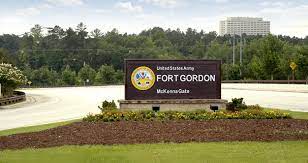
ATLANTA – Georgia’s Fort Gordon and Fort Benning are among nine Army bases that will be getting new names.
The Naming Commission, which Congress created last year to rename military installations named for historical figures with ties to the Confederacy, has developed a list of fewer than 100 names it is considering. The panel will make recommendations to the U.S. House and Senate Armed Services committees by Oct. 1.
Fort Gordon near Augusta is named for John Gordon, who served as a general in the Confederate Army and went on to become Georgia’s governor. Gordon presided at the formal surrender of the Confederate Army of Northern Virginia at Appomattox, Va., in April 1865.
Fort Benning south of Columbus was named for Henry Benning, who was a leader in Georgia’s secessionist movement before the Civil War. Like Gordon, he was a general in the Army of Northern Virginia commanded by Gen. Robert E. Lee.
Other Army bases due to be renamed include Fort Bragg in North Carolina, Fort Rucker in Alabama; Fort Polk in Louisiana, and forts A.P. Hill, Lee and Pickett in Virginia.
The commission visited the installations last year for listening sessions with military commanders and community leaders and to gain feedback including preferences for new names. During the listening sessions and a public comment period, the panel received more than 34,000 submissions for renaming, including 3,670 unique names.
“It’s important that the names we recommend for these installations appropriately reflect the courage, values and sacrifices of our diverse military men and women,” said retired Navy Admiral Michelle Howard, the chair of the Naming Commission. “We also are considering the local and regional significance of names and their potential to inspire and motivate our service members.”
Suggestions for new names include former President and five-star Gen. Dwight D. Eisenhower, abolitionist Harriet Tubman, former Gen. and Secretary of State Colin Powell and World War II Gens. Omar Bradley and George Marshall, who also served as secretary of state and secretary of defense.
This story is available through a news partnership with Capitol Beat News Service, a project of the Georgia Press Educational Foundation.
ATLANTA – U.S. Sen. Raphael Warnock, D-Ga., is pushing to get legislation he introduced last month capping the cost of insulin to the Senate floor by the Easter recess.
The bill would limit the cost of insulin to $35 per month. The measure would apply to private group or individual health plans as well as Medicare.
“I’m interested in lowering the cost of prescription drugs in the first place,” Warnock told Capitol Beat Thursday in an exclusive interview. “[But] in no place is the urgency of this clearer.”
Warnock explained that more than 12% of Georgia adults have diabetes, while diabetes patients account for $1 of every $4 spent on health care in the U.S.
“Insulin has doubled [in cost] over the last four or five years,” he said. “You have to ask yourself why? It’s not research and development. This disease has been around 400 years. … [Drug companies] will engage in price gouging if they can.”
Warnock said he’s working with senators on both sides of the aisle who support a cap on insulin. His bill could be combined with another measure yet to be introduced by Sens. Susan Collins, R-Maine, and Jeanne Shaheen, D-N.H., according to a Democratic source with knowledge of the conversations.
A bill capping the cost of insulin also was introduced into the U.S. House of Representatives last month.
Warnock said 20 states and the District of Columbia have passed legislation capping patient copays for insulin, including the Republican-led states of Alabama, Oklahoma and Utah.
“This is a bipartisan issue,” he said. “Everybody knows somebody with diabetes.”
This story is available through a news partnership with Capitol Beat News Service, a project of the Georgia Press Educational Foundation.
ATLANTA – Most Georgians support the United States developing its own domestic sources of energy rather than relying on other regions of the world, according to a poll released Thursday.
The online survey of a representative cross-section of registered voters conducted March 1-6 by the polling firm Morning Consult found 90% in favor of the U.S. stepping up energy production. The support was split almost evenly between Republicans and Democrats.
An even larger majority – 92% of those surveyed – said the current situation in Europe shows what can happen when nations depend on energy production from foreign sources that have their own agendas. Some European nations have been hampered in their response to the Russian invasion of Ukraine by their dependence on Russian oil.
“Given the ongoing crisis in Ukraine and the rising cost of energy both at home and abroad, there is no question that access to secure, reliable and affordable energy is top of mind for voters in Georgia,” said David McGowan, Southeast Region director of the American Petroleum Institute (API), which represents the oil and gas industries and commissioned the poll.
“Now is the time for this administration to advance policies that incentivize U.S. production and send a clear message that America is open to energy investment.”
Frank Macchiarola, the API’s senior vice president of policy, said U.S. oil production began losing ground last year when President Joe Biden banned new leases for drilling on federal lands.
“I’d like to see the administration … utilize more of the energy resources we have,” Macchiarola said. “There’s always going to be a need to get energy from some countries. The question is whether we’re going to be overly reliant on certain places.”
Biden banned U.S. imports of Russian oil last week in response to its attack on Ukraine. While that move has been widely supported, the administration has come in for criticism for reaching out to Venezuela and Saudi Arabia to explore replacing Russian oil.
“[The] Keystone XL [pipeline] would deliver 830,000 barrels of oil per day from Canada,” Macchiarola said. “Now, we’re looking to hostile regions to get energy.”
According to the API Georgia poll, 87% of respondents believe more domestic production of oil and natural gas could help lower energy costs, while 86% said expanding production would help make the U.S. and America’s allies more secure against the actions of other countries such as Russia.
The poll’s margin of error was plus-or-minus 4%.
This story is available through a news partnership with Capitol Beat News Service, a project of the Georgia Press Educational Foundation.