
ATHENS — Georgia’s two candidates for governor showcased their competing plans for healthcare, jobs and other top issues at a business-focused gathering Wednesday.
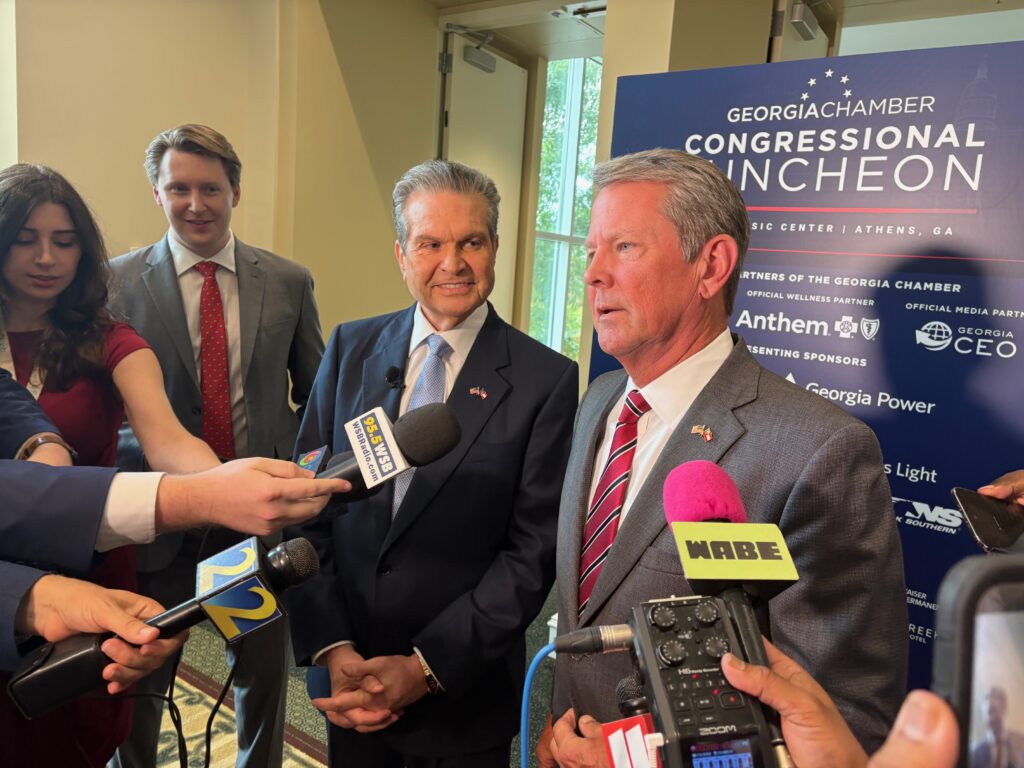
Gov. Brian Kemp also gave his full-throated support to fellow Republican Rick Jackson, saying Jackson was the most likely candidate to continue his business-friendly policies.
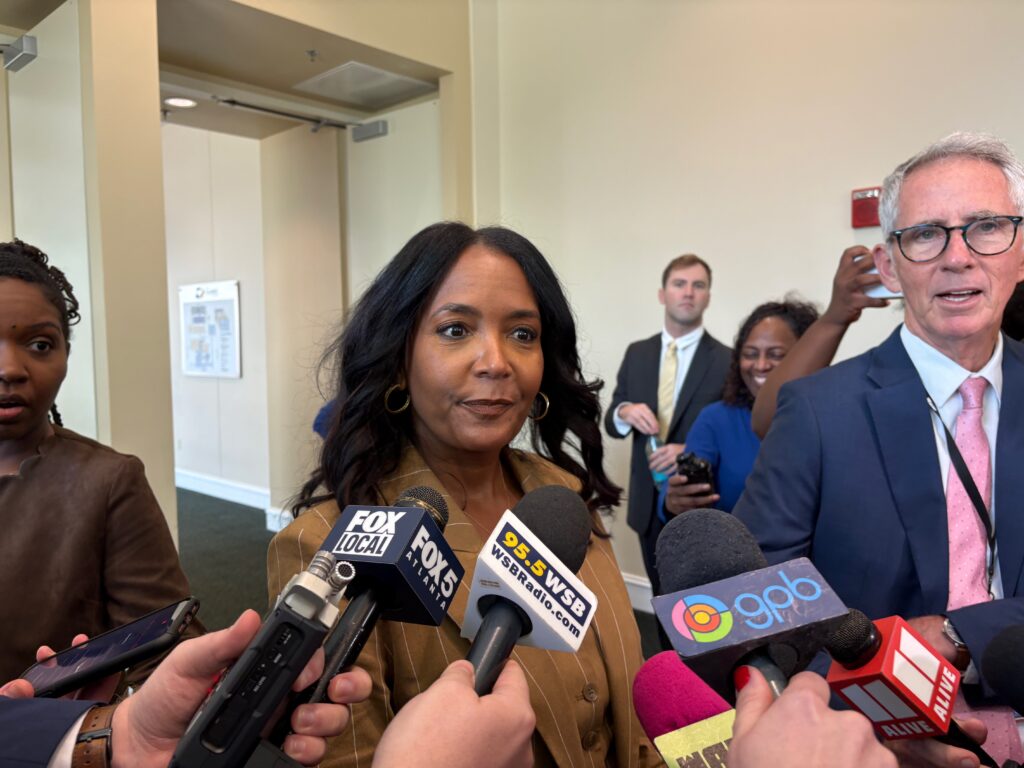
The Democrat in the race, former Atlanta Mayor Keisha Lance Bottoms, spoke of government solutions for problems such as the shortage of affordable housing and healthcare.
The two candidates did not confront each other directly, outlining their platforms instead from a ballroom stage and in a hallway with reporters.
But the event, hosted by the Georgia Chamber of Commerce at The Classic Center in Athens, offered a rare opportunity to see them at the same venue, talking about many of the same issues.
Bottoms touted developer agreements for affordable housing reached during her tenure as mayor. And she said she would push for Medicaid expansion to confront rural hospital closures and the growing number of Georgians without health insurance.
Kemp, meeting with reporters with Jackson by his side, said he had decided to back the wealthy healthcare staffing entrepreneur because Jackson had succeeded despite a tough childhood in foster homes, a story that Jackson has repeatedly shared while campaigning.
Kemp also said he believed Jackson would build on his business-friendly legacy as governor, which Jackson quickly confirmed.
Jackson said he would seek to cut taxes while continuing to recruit companies to locate in the state, adding that he would steer economic development and jobs to rural Georgia as Kemp has done.
He said he would help small businesses and farmers.
From the stage, before an audience of hundreds in suits, Jackson said he planned on “increasing a huge amount of investment dollars for venture capital, early-stage development and PE just for Georgia companies. Atlanta is too big not to have more capital.”
Bottoms also said she would cater to small business, but her approach included government money. She said she would establish a state agency for small business and change contracts for services.
“I’d like to break up some of these mega-contracts in our state … to give small businesses an opportunity to compete for those contracts,” she said.
Bottoms also said she wanted to end Georgia’s Pathways to Coverage program, Kemp’s approach to Medicaid, which she called wasteful.
A federal review last year found that most of the money went to administrative overhead rather than to medical assistance. The program was set to expire last September, but the administration of President Donald Trump granted a one-year extension.
Jackson told reporters that he believed in “intelligent” Medicaid expansion. By that, he meant a federal block grant with few strings attached, for a program designed to transition recipients into jobs and onto private insurance.
Pathways already has a work requirement.
Bottoms and Jackson also had divergent views on data centers.
Bottoms reiterated an earlier call to “pause” data center approvals, while Jackson said he would leave it up to communities whether to allow them to build, noting the potential local tax benefits.