ATLANTA — A special master appointed by the U.S. Supreme Court to hear arguments in a long-running dispute between Florida and Georgia over water allocation sided with the Peach State Thursday.
Paul Kelly recommended the justices dismiss Florida’s 2013 lawsuit
asking the federal courts to order Georgia to withdraw less water from the
Chattahoochee River basin, a system that includes the lower Flint River.
Florida’s lawyers argued Georgia’s withdrawals to supply water
customers in rapidly growing metro Atlanta and irrigate crops in the South
Georgia Farm Belt aren’t leaving enough water at the state line to support the
environmentally fragile oyster industry in Apalachicola Bay.
But after hearing from both sides last month in a New Mexico
courtroom, Kelly disagreed with Florida’s contentions.
“The evidence has not shown harm to Florida caused by Georgia,”
Kelly concluded in his report. “The evidence has shown that Georgia’s water use
is reasonable, and the evidence has not shown that the benefits of apportionment
would substantially outweigh the potential harm.”
“We greatly appreciate Special Master Kelly’s recognition of
Georgia’s strong, evidence-based litigation,” Gov. Brian Kemp said in a
statement shortly after the report was released. “We will continue to be good
stewards of water resources in every corner of our state, and we hope that this
issue will reach a final conclusion soon.”
Kelly’s recommendation was the second handed down in the case
that was favorable to Georgia. In 2016, the first special master assigned the
case, the late Ralph Lancaster, also recommended the Supreme Court deny
Florida’s water allocation demands.
However, Lancaster’s ruling did not address the merits of
Florida’s case. Instead, he reasoned that since the U.S. Army Corps of
Engineers – which controls the flow of water down the Chattahoochee River
through a series of reservoirs – is not a party to the lawsuit, Florida could
not be guaranteed the relief it was seeking.
As a result, the Supreme Court ordered the case sent to a second
special master for a hearing on the merits.
With a second opportunity to argue the case, Florida’s lawyers
primarily targeted farmers in the lower Flint as water wasters, essentially
acknowledging the Atlanta region’s successful efforts in recent years to curb
wasteful water use habits.
While metro Atlanta’s population has grown by 1.3 million since
2000, water withdrawals have declined by more than 10%, thanks to conservation
efforts undertaken by the region’s water utilities.
“The fact that [Florida] is focusing on the Flint says to me
they’ve recognized they don’t have much of a case regarding the Chattahoochee,”
said Brad Currey, retired CEO of Rock-Tenn Inc. and a board member of ACF
Stakeholders, a decade-old nonprofit that includes farmers, seafood harvesters,
utility executives, manufacturers and environmental advocates.
Florida had more leeway to attack Georgia’s irrigation practices.
As recently as the turn of this century, farmers in the region did not measure
their water consumption with meters, so they had no idea how much they were
using.
Since then, however, the vast majority have installed meters.
Also, technological advances have allowed farmers to install low-pressure drip
nozzles located close to the ground instead of spraying large volumes of water
onto farm fields, most of which is lost to evaporation.
“The next iteration of that … is to have soil-moisture sensors in
the field feeding back into the hardware so it’s applying exactly what’s
needed,” said Gordon Rogers, executive director of Albany-based Flint
Riverkeeper.
Florida wants the Supreme Court to place a cap on Georgia’s
water usage, a request Georgia’s lawyers have called draconian. Such a limit,
they have argued, would bring growth in metro Atlanta grinding to a halt,
wreaking severe damage to the state economy.
Kelly’s recommendation lands the case back with the Supreme
Court. The justices can decide whether to accept or reject the special master’s
recommendation.
ATLANTA – U.S. Rep. Doug Collins, R-Gainesville, would have been the safe choice in Gov. Brian Kemp’s search to replace retiring U.S. Sen. Johnny Isakson, R-Ga. A leading voice against impeaching President Donald Trump on the House Judiciary Committee, Collins was the president’s favorite to move to the other side of the Capitol as Isakson’s interim successor. The conservative lawyer who served in the General Assembly and did a tour of duty in Iraq with the U.S. Air Force is popular with the Republican base that elected Kemp last year. But it wasn’t lost on the GOP governor that his margin of victory over Democrat Stacey Abrams was a lot smaller than wins scored by Nathan Deal and Sonny Perdue, Kemp’s two Republican predecessors. Bolstered by votes from suburban white women, a group the GOP had dominated in Georgia since the turn of the century, Abrams came within fewer than two points of becoming the Peach State’s first Democratic governor since Perdue derailed Roy Barnes’ bid for a second term in 2002. So, Kemp tapped Atlanta businesswoman Kelly Loeffler last Wednesday to step into Isakson’s shoes come January, a political newcomer who has scored her previous successes as CEO of a Bitcoin-focused affiliate off Intercontinental Exchange Inc., headed by husband Jeff Sprecher, and as co-owner of the Atlanta Dream of women’s pro basketball. Even if word of Loeffler’s appointment hadn’t been widely leaked in the news media in the days leading up to the announcement, the governor’s selection of a woman for the Senate post shouldn’t have come as a surprise, said Kerwin Swint, a political science professor at Kennesaw State University. It fits a pattern of encouraging diversity Kemp began setting last February during his first six weeks in office when he named Allen Poole, an African-American, director of the Georgia Office of Highway Safety. The governor followed that up in June by appointing Doraville Police Chief John King state insurance commissioner following the indictment of Jim Beck, making King Georgia’s first Latino statewide constitutional officer. “He has said he was open to unconventional candidates and growing the party,” Swint said. Charles Bullock, a political science professor at the University of Georgia, said there’s a political upside to Kemp appointing a woman to the Senate. Bullock noted that last fall, for the first time, the percentage of votes in Georgia cast by whites dipped below 60%. “With the electorate becoming increasingly diverse and the increasing role suburban white women are playing, making an appointment that may bring new Republican voters to the table may be rewarding for him,” Bullock said. Bullock said another advantage to the pick is any pushback Kemp might get from the right wing of the state Republican Party over not choosing Collins likely will have dissipated by the time the governor is up for re-election in 2022. “This may be old news by then,” he said. In fact, Kemp can turn the selection of Loeffler to his advantage in 2022, depending on the job she does in the Senate. If she wins election next November to complete Isakson’s unexpired term, she would be on the ballot in 2022, sharing the top of the ticket with the governor to deliver a potentially potent one-two punch.
ATLANTA – U.S. Sen. Johnny Isakson issued a call for bipartisanship to his Senate colleagues Tuesday as he said farewell to Congress after 15 years in Washington.
“There’s something missing in this place,” Isakson, R-Ga., who is retiring at the end of this year due to health problems, said on the Senate floor. “I am a bipartisan person. I never saw people get things done by not agreeing with each other. … You have to find common ground.”
Isakson drew praise from his fellow senators during a luncheon Tuesday before his farewell speech not only for his spirit of bipartisanship – an increasingly rare attribute in Washington – but for his friendly nature.
“If the Senate were to hold a secret-ballot popularity contest, Johnny Isakson would win in a bipartisan landslide,” said Senate Majority Leader Mitch McConnell, R-Ky. “He commands bipartisan respect and affection to a degree that is remarkable.”
Isakson announced in September he would be leaving the Senate halfway through his third term. Gov. Brian Kemp is expected to name Atlanta businesswoman Kelly Loeffler Wednesday as Isakson’s interim successor.
For his part, Isakson also singled out several federal elected officials for praise, including McConnell and Vice President Mike Pence, who presides over the Senate. But he saved his most glowing remarks for U.S. Rep. John Lewis, D-Atlanta, who was in the Senate chamber Tuesday along with other members of Georgia’s congressional delegation.
“John is one of my real heroes in life,” Isakson said of Lewis, who rose from poverty in rural Alabama to become a key civil rights leader in the 1960s and survive a brutal beating before his election to Congress. “I watched what he went through to make us see the light.”
Lewis paid tribute to Isakson last month on the House floor, and the two embraced after the speech in a rare display of congressional bipartisanship that was captured in a widely publicized photo.
In taking his leave of Congress, Isakson urged his colleagues to work together to overcome the partisan politics that has become a way of life in Washington. Otherwise, he said, nothing will get done.
“I see things happening that scare me,” he said. “We’re better than the hate and the vile statements some people make. … We’ve got to sit down, get it out in the open and talk about it.”
Isakson, 74, leaves office as the only Georgia politician ever elected to the U.S. House and Senate as well as both houses of the General Assembly. Before being elected to the U.S. Senate in 2004, he served five years in the House representing a congressional district in the suburbs north of Atlanta.
Isakson was elected to the Georgia House of Representatives in 1974 when there were only a handful of Republicans serving under the Gold Dome. He rose to House minority leader, then spent two terms in the state Senate during the 1990s.
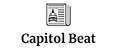
Photo by Mary Grace Heath, Governor’s Photographer
ATLANTA – Gov. Brian Kemp named Atlanta businesswoman Kelly Loeffler Wednesday to succeed retiring U.S. Sen. Johnny Isakson, R-Ga., when the veteran politician leaves office at the end of this year. Loeffler’s appointment had been widely leaked in the news media in recent days and drew intense criticism in conservative Republican circles at the national level, including right-wing media pundits not convinced of her conservative credentials.
President Donald Trump openly favored U.S. Rep. Doug Collins, R-Gainesville, who has been a staunch defender of the president in the current impeachment proceedings in the House. Kemp and Loeffler spent much of Wednesday’s news conference at the state Capitol portraying her as a lifelong Republican who is pro-life, supports gun rights and backs the president’s determination to crack down on illegal immigration by building a wall along the U.S.-Mexico border. “Not every American woman is liberal,” Loeffler said. “Many of us are conservative and proud of it.”
Kemp compared Loeffler, who has never held elective office, as a political outsider in the mold of Trump and Georgia’s other U.S. senator, Republican David Perdue, who ran several Fortune 500 companies before being elected to Congress in 2014.
“We have seen first-hand the impact that political outsiders like Donald Trump and David Perdue have in Washington, D.C.,” the governor said. “It’s time we send them some reinforcements.”
Loeffler grew up on a farm in southern Illinois and worked her way through college and grad school waiting tables. Her husband, Jeff Sprecher, is CEO of Intercontinental Exchange Inc., which owns the New York Stock Exchange, and she is CEO of Atlanta-based Bakkt, a Bitcoin-focused subsidiary of Intercontinental Exchange.
“I’m not a career politician,” Loeffler said. “I have spent the last 25 years building businesses, taking risks and creating jobs. I haven’t spent my life trying to get to Washington.”
Loeffler condemned the Democrat-led Impeachment process unfolding in the House as a “distraction” and a “sideshow” that is preventing Republicans and Democrats in Congress from working together to solve the nation’s challenges.
She also argued socialists have taken over the Democratic Party through the presidential candidacies of Sens. Elizabeth Warren of Massachusetts and Bernie Sanders of Vermont.
Loeffler said she will be a candidate next November to complete the final two years of Isakson’s unexpired term.
“As an outsider in Washington, I know I have to earn your support and trust,” she told an audience of Republican elected officials and GOP activists assembled inside the governor’s ceremonial office. “Through my votes and actions, that’s exactly what I’m going to do.” Isakson announced his retirement plans in September, citing health reasons.

 ATLANTA – U.S. Sen. Johnny Isakson issued a call for bipartisanship to his Senate colleagues Tuesday as he said farewell to Congress after 15 years in Washington.