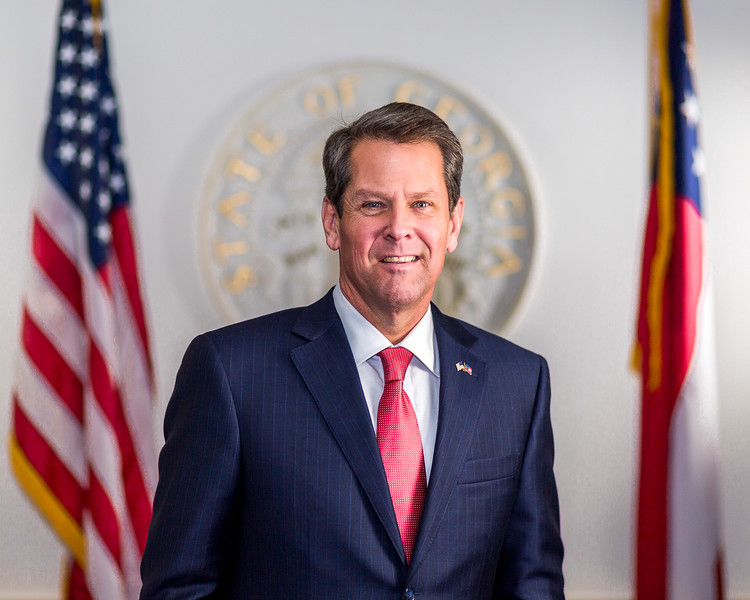
ATLANTA – Gov. Brian Kemp unveiled a
$28.1 billion budget proposal Thursday that would set a new record for state
spending in fiscal 2021 despite the air of fiscal uncertainty surrounding this
year’s General Assembly session.
While the spending plan would surpass the
then-record $27.5 billion fiscal 2020 budget lawmakers passed last spring, the
increase would be far less than the $1.3 billion spending hike the legislature
adopted a year ago.
Responding to several months of declining
state tax collections, the governor ordered most state agencies last summer to
reduce their spending during the current fiscal year by 4% and by 6% percent in
fiscal 2021, which begins July 1.
“This past August, I challenged state
agencies to identify opportunities to streamline operations, eliminate
duplicative programs, and leverage technology to better serve our state’s
citizens,” Kemp wrote in his annual budget message to members of the General
Assembly. “This fiscal year (FY) 2021 budget aligns existing resources to
accomplish those objectives.”
However, some of Georgia’s biggest
spending agencies have been exempted from the cuts, including the state
Department of Education and the state’s Medicaid program overseen by the
Department of Community Health.
Just keeping up with enrollment growth in
Georgia’s public schools is a big budget driver. Kemp is asking for $257.2
million to cover enrollment growth in the schools.
Another $89.6 million is earmarked for
increased enrollment in Medicaid, an expense unrelated to the governor’s
initiatives to obtain federal waivers to tailor Georgia Medicaid to fit the
more conservative approach he wants to take with the program.
The $2,000 teacher pay raise Kemp
announced in Thursday’s State of the State address would cost the state $362.2
million next year. Another $40.7 million would be used to give state employees
making less than $40,000 a year a $1,000 raise.
One area where the state could save money
in fiscal 2021 is the annual bond package, if members of the Georgia House and
Senate don’t pile on too many additional building projects when they get their
turn with the budget.
Kemp is proposing $890 million in bonds
to finance construction projects across Georgia, down from this year’s $1.1
billion bond package.
The largest individual project on the
list would provide $70 million to expand the Savannah Convention Center on
Hutchinson Island, the first installment of what city officials hope will add
up to $210 million over three years.
The project would double the exhibit hall
space to 200,000 square feet, add a 60-foot-wide hangar door, a new entrance
with an all-glass façade, outdoor space, a 40,000-square-foot ballroom, 15
meeting rooms and 900 parking spaces. The center is frequently booked to
capacity, forcing it to turn away larger gatherings that would bring in more
revenue.
The proposed bond package also includes $54.5 million to build a new state Department of Public Safety headquarters in Atlanta, $42.8 million for a STEM research building at the University of Georgia, $34.8 million to renovate and expand Building 100 at Gwinnett Technical College, $30.7 million to expand Technology Square on the Midtown Atlanta campus of Georgia Tech and $19.5 million toward the $35 million price tag of the University of North Georgia’s Mike Cottrell College of Business in Dahlonega, due to open in 2022.
Ongoing bridge repair and replacement
projects across the state would receive a $50 million influx of bond financing.
The governor earmarked about $2.9 million
to beef up the gang task force he created last year by adding seven new
positions.
A commission the General Assembly created
last year to oversee Georgia’s new medical cannabis program would receive
$354,577. Supporters of expanding the availability of cannabis oil in Georgia
to treat a number of diseases have been complaining about the program’s slow
start due to a lack of funding.
Another $316,461 would go toward
increasing election security as the state switches over to new voting machines
that feature both electronic touch screens and paper ballot backups.
Many of Kemp’s spending requests would be
spread over the fiscal 2020 mid-year budget and the fiscal 2021 spending plan.
The governor is recommending $27.4
billion for the mid-year budget, which would cover state spending through June
30. That represents a slight cut from the current $27.5 billion spending plan.
ATLANTA – Gov. Brian Kemp vowed Thursday to give Georgia
teachers the second installment of a $5,000 pay raise, despite what promises to
be a tight budget year.
The Republican governor told a joint session of the General
Assembly his fiscal 2021 budget proposal will include a $2,000 increase for public-school
teachers, who got the first $3,000 of the two-step raise last year.
“This will enhance retention rates, boost recruitment
numbers and improve educational outcomes in schools throughout Georgia,” Kemp
said during a 31-minute State of the State address. “By investing in education,
we can build a strong house, a place where everyone learns and all Georgians
have an opportunity to thrive.”
The timing of the teacher raise had been in doubt going into
the 2020 legislative session that began on Monday. State tax collections came
in far below expectations during the first half of the current fiscal year, which
prompted Kemp to order most state agencies to reduce spending by 4% during this
fiscal year and 6% in fiscal 2021.
On Thursday, the governor didn’t mention specific cuts he is
recommending in his budget proposals.
But he peppered the State of the State speech with proposals
to increase spending in areas he considers priorities, including adoption and
the fight against criminal gangs and human trafficking.
Kemp asked lawmakers to triple Georgia’s adoption tax credit
from $2,000 to $6,000 and lower the age qualification for adoptive parents from
25 to 21. He also announced plans to launch a commission to look for ways to
improve the state’s foster care system.
“Our goal is simple: to keep our kids safe, to encourage
adoption and ensure that young Georgians – no matter where they live – has the
opportunity to live in a safe, happy, loving home,” he said.
While the governor was less specific on what he wants to do
on gangs and human trafficking, he promised to push for tougher legislative
measures aimed at street gangs and human traffickers.
“Gangs and drug cartels are fueling another public safety
crisis,” he said. “Every day, hundreds of people are bought and sold for sex in
our state. … We must advance legislation that closes loopholes that leave
children vulnerable to exploitation.”
Kemp also endorsed an effort already underway early in this
year’s General Assembly session to prohibit so-called “surprise billing” in
Georgia, which occurs when patients are charged extra for a service provided
inside their insurance plan’s network by an out-of-network specialist.
“We have hardworking Georgians who by no fault of their own
are on the brink of bankruptcy because there’s no transparency in health-care
billing,” he said. “Families are living on a prayer because the system is
rigged against them. This year, we will implement long-overdue reforms that put
our families first.”
Finally, Kemp announced the state will honor newly retired
U.S. Sen. Johnny Isakson, R-Ga., by creating a Johnny Isakson Professorship for
Parkinson’s Research at the University of Georgia. After 45 years in public
service at the state and federal levels, Isakson announced in September he
would leave office at the end of last year, citing health problems including
Parkinson’s disease.
“Through this partnership, we will use technology and
innovation to break new ground,” Kemp said. “With the grit and resolve of
Johnny Isakson, we will move one step closer to a cure.”
After the governor’s speech, Senate
Democratic leaders said Kemp’s talk was thin on details about major issues this
year like the state’s budget cuts.
Senate Minority Leader Steve Henson said
lawmakers need more insight on what revenue-raising measures the governor would
support beyond an online sales tax, which cleared both chambers Thursday
afternoon.
“We were surprised that the State of the
State seemed to lack specificity and depth,” said Henson, D-Stone Mountain.
Other Democratic leaders in the Senate
took aim at Kemp’s budget cuts as well his anti-gang initiative.
Senate Minority Whip Harold Jones said
Georgia already has tough anti-gang laws and needs more funding for judges and
prosecutors to enforce them.
“What is not needed is any new draconian
efforts,” said Jones, D-Augusta.
Other Democratic senators speaking at a
news conference Thursday called for full Medicaid expansion and for restoring
the HOPE scholarship to cover full student tuition.
This story is updated with the Democratic
response to Kemp’s address.
ATLANTA – Gov. Brian Kemp vowed Thursday to give Georgia
teachers the second installment of a $5,000 pay raise, despite what promises to
be a tight budget year.
The Republican governor told a joint session of the General
Assembly his fiscal 2021 budget proposal will include a $2,000 increase for public-school
teachers, who got the first $3,000 of the two-step raise last year.
“This will enhance retention rates, boost recruitment
numbers and improve educational outcomes in schools throughout Georgia,” Kemp
said during a 31-minute State of the State address. “By investing in education,
we can build a strong house, a place where everyone learns and all Georgians
have an opportunity to thrive.”
The timing of the teacher raise had been in doubt going into
the 2020 legislative session that began on Monday. State tax collections came
in far below expectations during the first half of the current fiscal year, which
prompted Kemp to order most state agencies to reduce spending by 4% during this
fiscal year and 6% in fiscal 2021.
On Thursday, the governor didn’t mention specific cuts he
will recommend when he releases his budget recommendations later this week.
But he peppered the State of the State speech with proposals
to increase spending in areas he considers priorities, including adoption and
the fight against criminal gangs and human trafficking.
Kemp asked lawmakers to triple Georgia’s adoption tax credit
from $2,000 to $6,000 and lower the age qualification for adoptive parents from
25 to 21. He also announced plans to launch a commission to look for ways to
improve the state’s foster care system.
“Our goal is simple: to keep our kids safe, to encourage
adoption and ensure that young Georgians – no matter where they live – has the
opportunity to live in a safe, happy, loving home,” he said.
While the governor was less specific on what he want to do
on gangs and human trafficking, he promised to push for tougher legislative
measures aimed at street gangs and human traffickers.
“Gangs and drug cartels are fueling another public safety
crisis,” he said. “Every day, hundreds of people are bought and sold for sex in
our state. … We must advance legislation that closes loopholes that leave
children vulnerable to exploitation.”
Kemp also endorsed an effort already underway early in this
year’s General Assembly session to prohibit so-called “surprise billing” in
Georgia, which occurs when patients are charged extra for a service provided
inside their insurance plan’s network by an out-of-network specialist.
“We have hardworking Georgians who by no fault of their own
are on the brink of bankruptcy because there’s no transparency in health-care
billing,” he said. “Families are living on a prayer because the system is
rigged against them. This year, we will implement long-overdue reforms that put
our families first.”
Finally, Kemp announced the state will honor newly retired
U.S. Sen. Johnny Isakson, R-Ga., by creating a Johnny Isakson Professorship for
Parkinson’s Research at the University of Georgia. After 45 years in public
service at the state and federal levels, Isakson announced in September he
would leave office at the end of last year, citing health problems including
Parkinson’s disease.
“Through this partnership, we will use technology and
innovation to break new ground,” Kemp said. “With the grit and resolve of
Johnny Isakson, we will move one step closer to a cure.”
ATLANTA – Gov.
Brian Kemp is turning to a veteran in Georgia transportation circles to serve
as the state Department of Transportation’s next planning director.
Kemp named
Jannine Miller Wednesday to succeed the post vacated by former Georgia Rep. Jay
Roberts last September.
Miller is
returning to Georgia after serving as senior advisor to U.S. Transportation
Secretary Elaine Chao.
Before that,
she built a lengthy track record with the state, including stints at the helm
of the Georgia Regional Transportation Authority and the state Department of
Economic Development’s Center for Innovation and Logistics.
“The
planning director sets the long-term strategic goals for Georgia’s infrastructure
investments and coordination at the federal, state and local levels,” Kemp
said. “Jannine’s experience in transportation policy, budgetary analysis and
planning, and big-picture infrastructure development is truly unparalleled, and
I look forward to working with her in the years ahead.”
The General
Assembly created the planning director position at the DOT more than a decade
ago to increase coordination between the transportation agency and the
governor’s office.
Roberts
became planning director in 2015 after the Republican from Ocilla ended a
legislative career highlighted by his successful sponsorship of a $900 million
transportation funding bill.
ATLANTA – Gov. Brian Kemp decided no news is good news
Wednesday, breaking from the tradition of governors announcing a new initiative
or two at the annual Eggs and Issues breakfast.
Instead, the Republican governor will wait until Thursday’s
State of the State address to a joint session of the General Assembly to talk
about his priorities for the 2020 legislative session.
“Tomorrow, I will outline my blueprint for a stronger, safer
and more prosperous Georgia to the people of our state,” Kemp posted on his
Twitter account. “But for today, let’s focus on a historic 2019.”
True to his word, the governor devoted his speech to more
than 2,600 political and business leaders – a record for the Eggs and Issues breakfast
sponsored by the Georgia Chamber of Commerce – to his administration’s
accomplishments during his first year in office. His list included the creation
of a task force under the Georgia Bureau of Investigation to target criminal
gangs, the formation of a commission led by first lady Marty Kemp to combat
human trafficking and a $3,000 teacher pay raise.
Kemp also touted the authorization he received last year
from the legislature to take a “Georgia-centric” approach to health-care reform
by seeking two federal waivers to expand the state’s Medicaid program through a
more conservative approach than the Affordable Care Act allows and offer an
alternative to Obamacare’s health-insurance exchanges aimed at lowering
insurance premiums.
“This year, we will build off that momentum,” he said. “We
cannot and will not take our feet off the gas.”
Lt. Gov. Geoff Duncan did make news following Kemp’s speech
by announcing the formation of a task force that will look for ways to fulfill
Duncan’s pledge to make Georgia the technology innovation capital of the East
Coast.
The Georgia Innovates Task Force will be co-chaired by
former U.S. Sen. Johnny Isakson, R-Ga., and G.P. “Bud” Peterson, the retired
former president of Georgia Tech. It will include a host of business and
academic leaders from around the state, among them Paul Bowers, president,
chairman and CEO of Georgia Power Co.; Raphael Bostick, president and CEO of
the Federal Reserve Bank of Atlanta; and Barbara Rivera Holmes, president and
CEO of the Albany Area Chamber of Commerce and a member of the University
System of Georgia Board of Regents.
“I have asked this group of leaders to come up with big
ideas to put Georgia on the map when it comes to technology and making our
state as important as Silicon Valley,” Duncan said. “I want Georgia to be a
national leader in technology research, development and implementation and
allow for growth and evolution across all parts of Georgia.”
Georgia House Speaker David Ralston warned the 2020 session is
likely to be a long one, as lawmakers grapple with decisions on the spending
cuts Kemp will recommend to adjust for a sluggish revenue outlook.
“Georgia is a big, growing, dynamic state,” said Ralston,
R-Blue Ridge. “Budget decisions that impact the people of this state are too
important to be influenced by a legislative calendar. We’ll take the time
necessary to get the work done.”