ATLANTA – Georgia tax collections rebounded somewhat last month from a dismal showing in April but still were down significantly compared to May of last year.
With the economic lockdown forced by the coronavirus pandemic remaining partly in effect, the state Department of Revenue brought in $1.58 billion in May, down 10.1% from the same month a year ago.
In contrast, Georgia tax revenues dropped by nearly 36% in April, a huge drop revenue officials attributed to a decision to postpone tax payment deadlines from April 15 until July 15.
Individual income tax receipts fell by 3.4% last month, largely driven by a large decrease in tax payments – which declined by 38% compared to May 2019 – due to the extended payment deadline.
Net sales taxes showed a much steeper decline, falling by 11.5% in May, while typically more volatile corporate income tax collections were down 40.8%, primarily due to a huge drop-off in corporate income tax return payments of 90.4%.
Monday’s report from the revenue agency was the last state tax receipts information Georgia lawmakers will get before the General Assembly resumes the 2020 legislative session next week. The session was suspended in mid-March due to the pandemic with 11 legislative days remaining on the calendar.
The top order of business will be cutting spending by state agencies by 11% across the board, only a slightly less daunting challenge than the 14% reductions Gov. Brian Kemp had ordered before receiving a more positive revenue forecast last week.
The legislature faces a tight deadline, with fiscal 2021 set to begin July 1.
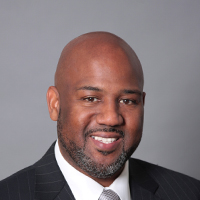
Chris Clark, president and CEO, Georgia Chamber of Commerce
ATLANTA – For the second time in the last two weeks, Georgia’s two largest business organizations are asking the General Assembly to pass a hate-crimes bill when the 2020 legislative session resumes next week.
Chris Clark, president and CEO of the Georgia Chamber of Commerce, and Hala Moddelmog, Clark’s counterpart at the Metro Atlanta Chamber, have joined executives from more than 60 companies in supporting the legislation.
The Georgia House of Representatives passed the bill last year in a bipartisan vote, and legislative leaders have vowed to push it through the state Senate and on to Gov. Brian Kemp’s desk this year.
“Momentum is growing for Georgia to join the other 45 states that already have these laws on the books,” Clark and Moddelmog wrote in a joint statement issued Monday. “When the Georgia General Assembly reconvenes in June, the Metro Atlanta Chamber and the Georgia Chamber urge swift passage of hate-crimes legislation that aligns our state’s laws with our values.”
The two chamber leaders endorsed the hate crimes bill late last month after the arrests of three white men in Glynn County in the fatal shooting of Ahmaud Arbery, a 25-year-old black man, but before the death of another black man, George Floyd, at the hands of a white police officer in Minneapolis touched off a wave of protests across the country.
High-profile Georgia-based businesses joining the two chambers in Monday’s letter include Delta Air Lines Inc., The Home Depot Inc., Coca-Cola Co., Georgia Power Co. and UPS Inc.
This isn’t the first time the state’s business community has gotten involved in civil rights legislation percolating under the Gold Dome. Business groups have fought for years against the passage of religious liberty legislation pushed by social conservatives opponents have argued would let companies discriminate against gays and lesbians, including a 2016 bill that was vetoed by then-Gov. Nathan Deal.
The hate-crimes bill, sponsored by Rep. Chuck Efstration, R-Dacula, would impose additional penalties on criminal defendants if it determined their victim was chosen based on his or her “race, color, religion, national origin, sexual orientation, gender, mental disability or physical disability.”
Lawmakers will return to the Capitol next Monday, three months after the coronavirus pandemic forced a suspension of this year’s session.
ATLANTA – Three Georgia Democrats with vastly different professional and political backgrounds are competing for their party’s nomination to challenge incumbent Republican U.S. Sen. David Perdue’s bid for a second term.
Democratic voters will choose in Tuesday’s Senate primary between businesswoman Sarah Riggs Amico, investigative journalist Jon Ossoff and former Columbus Mayor Teresa Tomlinson. The winner will take on Perdue in November.
Tomlinson is the only one of the three who has held elective office, serving two terms as mayor of Columbus from 2011 until the beginning of last year. In that role, she doubled as the city’s public safety director.
After entering office saddled with double-digit unemployment and depleted reserves brought on by the Great Recession, Tomlinson overhauled the city’s budget, including its employee pension system, which was 96% funded by the time her second term ended.
“When you haven’t been in government, you can have all sorts of ideas,” she said. “When you have been in government, you understand how to actually get things done. That’s the real-world experience I bring to the table.”
Both Amico and Ossoff have run for public office but come up short. Amico won the Democratic nomination for lieutenant governor two years ago but lost to Republican Geoff Duncan.
Ossoff ran unsuccessfully for a U.S. House seat in a special election in 2017.
Amico has spent her career in the business world. The graduate of Harvard University’s MBA program has served as the owner of Jack Cooper Transport & Logistics, an auto hauling company, for the last decade and its executive chair since 2014.
After the company filed for bankruptcy protection last summer, she said she restructured its operations without cutting employees’ pay or health benefits by building a coalition of Teamsters, customers and lenders.
“In politics, a lot of folks don’t work with people who disagree with them,” Amico said. “In business, you can’t do that. … There’s a tremendous pragmatic streak about having to deliver results and being able to bring folks together to do a job people are counting on you to do.”
Ossoff is the CEO of Insight TWI, a media company that produces investigative documentaries. It’s a skill he said the U.S. Senate could use.
“I expose corruption for a living. We’ve exposed sexual slavery, high-level political corruption and corporate corruption,” he said. “Our political system is corrupt. This is a time to elect people whose experience and careers demonstrate rooting out and destroying corruption.”
As is typical in party primaries, the candidates generally agree on the key issues, from the coronavirus pandemic and the push for policing reform to their approaches on health care, immigration and climate change.
All three roundly criticize President Donald Trump’s handling of the U.S. response to COVID-19.
Amico characterized the president as “slow, sluggish and ineffective” in handling the coronavirus outbreak.
“This is what happens when you fire your pandemic response team and systemically undermine science,” she said.
Tomlinson said Trump’s failure goes beyond politics and is rooted in his philosophy.
“He doesn’t have a full and robust understanding of a centralized federal government and his role in running it,” Tomlinson said. “He turned it over to the states, sometimes to the mayors.”
Vying with COVID-19 for the nation’s attention is the death of George Floyd, a black man, in Minneapolis at the hands of a white police officer charged with murder and the subsequent mass protests in cities across the country.
Ossoff is running campaign ads denouncing Trump’s threatening response to the demonstrators and calling for federal criminal justice reform. He and Amico have commended the peaceful protesters and urged Americans to stand with their calls for racial justice.
“The pervasive, systematic racism in our criminal justice system must end,” Ossoff said. “We cannot move on once the cameras move on.”
With the country’s attention riveted on coronavirus and the nationwide wave of protests of police brutality during the last two weeks, health care, immigration and climate change have been pushed to the back burner. But all three issues were front and center during the state-by-state Democratic presidential primary contests waged last winter and will be on voters’ minds going forward.
All three Democratic Senate candidates support expanding Medicaid coverage to more uninsured Georgians, ending coverage denials based on pre-existing conditions and adding a public option to the private coverages offered through the Affordable Care Act.
“Health care is a human right,” Amico said. “People shouldn’t be sick because they’re poor or poor because they’re sick.”
Amico said immigration is personal to her because she is married to a naturalized American citizen. All three Democratic Senate candidates have criticized Perdue for introducing legislation into the Senate that would base immigration decisions more on an applicant’s education and skills and less on family ties.
“Our policies need to reflect our country’s values,” she said. “Pulling apart families fleeing violent poverty is as un-American and I can imagine.”
The Democrats do differ on another issue: support for the Green New Deal, a legislative package that aims to address climate change with job-creating clean energy investments.
Tomlinson and Amico are all-in on the Green New Deal, Amico calling it one of her top priorities.
But Ossoff said he’s not ready to sign up until the initiative is fully fleshed out.
“I support an ambitious infrastructure program that will create jobs,” he said. “[But] I’m not going to endorse a two-page resolution proposing a sweeping overhaul of our entire economy and society until I understand the impact on Georgia. … The details matter.”
Tomlinson said skeptics of the Green New Deal don’t understand what it’s about.
“It’s nothing more than a set of principles,” she said. “We have an opportunity to create millions of new jobs. … I don’t know who would be opposed to that.”
Ossoff has been the leading campaign fund-raiser in the race, and a poll released last week showed him with a huge lead. But he has taken heat on the campaign trail for losing to Republican Karen Handel by a narrow margin three years ago in a special election for Georgia’s 6th Congressional District seat in Atlanta’s northern suburbs.
Held in a non-election year that made it essentially the only game in town, the contest drew a huge field of candidates and attracted so much money from across the country that it became the most expensive House race in history.
Ossoff dismisses the criticism as ignoring the odds stacked against him.
“I ran against 17 opponents when no one knew my name, and they had to send the president, vice president and speaker of the House to stop me,” he said.
Amico has been characterized by opponents as a “recovering Republican” and concedes she is not a lifelong Democrat. But she offset that questioning of her loyalty by pointing to her showing in 2018, when she rolled up more than 1.8 million votes in a close race against Duncan, a record for a Georgia Democrat running for lieutenant governor.
“There’s only one party fighting for working families, economic justice, to protect our right to vote and secure our election … and that is the Democratic Party,” she said.
Tomlinson’s candidacy might appear to be at a disadvantage because – unlike Amico and Ossoff – she does not live in metro Atlanta, the core of Democratic voting strength in Georgia. But she said gains Democrats have posted in the metro region in recent elections haven’t been enough to put the party over the top.
“Democrats aren’t going to win statewide depending on Atlanta alone,” she said. “There are large populations of Democrats who feel disenfranchised because the party only runs metro-Atlanta candidates for statewide seats.”
Tomlinson, who lived in DeKalb County for 28 years and practiced law in Atlanta before moving to Columbus, said she can attract a blend of support from both Atlanta and from outside of the metro region.
Four other candidates in the race have neither raised much campaign money or gained meaningful traction in the polls. But their presence on the ballot likely will make it difficult for any of the three major hopefuls to capture the 50%-plus-one-vote winning margin needed to avoid a runoff.
If no one captures a majority on Tuesday, the top two vote-getters would face off in a runoff Aug. 11 for the right to face Perdue.
AT A GLANCE
SARAH RIGGS AMICO
Age: 40
Lives: Marietta
Experience: Democratic nominee for lieutenant governor in 2018; Owner, Jack Cooper Transport & Logistics (2010-present); executive chair at Jack Cooper (2014-2020)
Education: Bachelor’s degree, Washington and Lee University; MBA, Harvard University
Family: Husband, Andrea; two daughters
JON OSSOFF
Age: 33
Lives: Atlanta
Experience: CEO, Insight TWI, media company that produces investigative documentaries (2013-present); national security aide to U.S. Rep. Hank Johnson, D-Stone Mountain (2007-2012)
Education: Bachelor’s degree, Georgetown University; Master’s degree, London School of Economics
Family: Wife, Alisha
TERESA TOMLINSON
Age: 55
Lives: Columbus
Experience: Partner, Hall Booth Smith, P.C.; mayor of Columbus (2011-2019), executive director, MidTown Inc., (2006-2010); partner, Pope, McGlamry, Kilpatrick, Morrison and Norwood, P.C. (16 years)
Education: Bachelor’s degree, Sweet Briar College; Law degree, Emory University
ATLANTA – Initial unemployment claims in Georgia are continuing to trend lower, the state Department of Labor reported Thursday.
Jobless Georgians filed 149,163 unemployment claims last week, down more than 16,000 from the week before and the fourth decline during the last five weeks.
The labor department paid out $160.8 million in benefits last week, up $1.3 million from the previous week. Since March 21, when Georgia businesses began shutting down to discourage the spread of COVID-19, the state has distributed more an $1.3 billion in regular unemployment benefits.
The agency issued more than $51 million in benefits last week to self-employed Georgians, gig workers, independent contractors and laid off employees of churches and other nonprofits through the federal Pandemic Unemployment Assistance (PUA) program.
During the last 11 weeks, the job sector accounting for the most initial unemployment claims by far has been accommodation and food services, with 595,036 claims.
The health care and social assistance job sector is next with 275,476 claims, followed by retail trade with 268,879 claims.
The wave of approximately 2 million claims that have deluged the labor department during the last two months have forced the agency to divert some of its roughly 1,000 employees from their regular duties to process those claims, Georgia Commissioner of Labor Mark Butler said Wednesday. About 650 to 700 employees are working on those claims, he said.
Butler is citing the department’s unprecedented workload in asking the General Assembly to spare the agency from across-the-board budget cuts Gov. Brian Kemp has ordered to help the state government weather the loss of tax revenues brought on by the coronavirus-induced economic downturn.
Chris Tomlinson, executive director, State Road and Tollway Authority
ATLANTA – The coronavirus pandemic has sent revenues on Georgia’s network of toll roads plummeting despite a significant uptick in traffic since businesses began reopening, the head of the State Road and Tollway Authority (SRTA) said Thursday.
Tolls paid by motorists traveling the toll lanes on interstates 75 and 85 in metro Atlanta declined by up to 90% during the last quarter, SRTA Executive Director Chris Tomlinson told members of the state Senate Appropriations Transportation Subcommittee during a budget hearing.
As a result, SRTA is projecting it will end the current fiscal year June 30 with only about $33 million of the $46 million the agency had expected to receive in fiscal 2020.
The outlook for the coming fiscal year is worse, with SRTA expected to bring in only $19.5 million in toll revenue, Tomlinson said.
“We’ve seen an unprecedented decline in toll revenues,” he said.
The plunging toll receipts seem to contradict the increase in traffic that has occurred since Gov. Brian Kemp began lifting the shelter-in-place restrictions he imposed to discourage the spread of COVID-19.
Georgia Commissioner of Transportation Russell McMurry told the subcommittee Thursday traffic on the state’s highways is back to within 20% of normal levels after bottoming out in early April. Truck traffic is at normal to slightly above-normal levels, he said.
But Tomlinson said the rise in traffic is not helping to boost toll revenues because of the nature of SRTA’s tolling system, which charges motorists willing to pay to travel in toll lanes rather than general-purpose lanes a toll based on the level of traffic at the time.
“Congestion is lighter and lasts a shorter period of time,” he said. “The average toll amount is going to decrease.”
For example, Tomlinson said the average toll for motorists on Interstate 85 has fallen from as high as $15 in February to just $4.
SRTA is forecasting declines in toll revenue of about 60% during the coming year on I-85 northeast of Atlanta and on the Northwest Corridor, which runs along I-75 and I-575 in Cobb and Cherokee counties. The forecast calls for a decline of 35% in toll receipts on I-75 south of Atlanta.
“We are looking at budget cuts in the order of 20% to 25% to deal with this issue,” Tomlinson said.
In the short run, SRTA plans to use about $10 million from the state Department of Transportation to help make ends meet, along with $3 million of SRTA’s $8 million in reserves.
But Tomlinson warned the agency must hold back some of its reserves to convince private lenders it depends on to finance future toll-lane projects that the agency’s finances are sustainable.
“We think [toll revenues] are going to come back,” he said. “Come the fall, we’ll have a better idea. [But], it’s going to be a lag.”
Kemp has instructed departments throughout state government to cut their fiscal 2021 budgets by 11% to help offset falling tax revenues resulting from the economic downturn brought on by COVID-19.
Starting with the Senate, the General Assembly will begin putting together a leaner state budget when lawmakers reconvene the suspended 2020 legislative session June 15.