ATLANTA – A German auto parts manufacturer is bringing its first manufacturing plant in the Southeast to Northwest Georgia, Gov. Brian Kemp announced Friday.
GEDIA Automotive Group will invest $85 million in a state-of-the-art plant in Whitfield County that will create 200 jobs in the greater Dalton area. The facility will produce parts for electric vehicles.
“As we are a national leader in manufacturing, logistics and workforce training, I’m confident this family-owned business will be very pleased with their decision to join the growing electric vehicle ecosystem here in Georgia,” Kemp said. “Once again, the state’s consistent investment in our Germany-based European office is paying off.”
GEDIA supplies lightweight automotive parts to Volkswagen, BMW, Mercedes-Benz, Volvo and other automakers around the world. The Georgia plant will be the company’s second in the United States, joining a plant in Michigan.
Friday’s announcement came as state Commissioner of Economic Development Pat Wilson was traveling in Germany to meet with government officials and trade partners. GEDIA’s German headquarters in the Bavaria region is among Wilson’s stops.
“This project is an essential step into the future for GEDIA,” said Markus Schaumburg, one of two GEDIA Automotive Group CEOs. “Moving closer to the original equipment manufacturers allows us to serve the American market even better.”
The new plant is expected to begin operations during the third quarter of next year.
ATLANTA – Both environmental groups and businesses are hailing congressional passage this week of legislation aimed at preserving the scenic beauty of America’s public parklands into perpetuity.
The Great American Outdoors Act, passed by large bipartisan majorities in the U.S. House and Senate, will support the Land and Water Conservation Fund with $900 million a year and provide $9.5 billion over five years to repair deteriorating infrastructure in the nation’s public spaces.
“Protecting and enhancing our public lands is an essential part of the American ethos,” said Jeannette Gayer, executive director of Environment Georgia.
“Whether it’s parks along the Chattahoochee, Georgia’s national forests or the Cumberland [Island] National Seashore, Georgians love and utilize public lands. This bill is not only an investment in outdoor space but also in our health and psyche.”
Business leaders say the legislation also will boost the nation’s economy, creating 100,000 direct and indirect jobs nationwide according to the U.S. Department of the Interior.
Outdoor recreation plays a major role in Georgia’s economy, accounting for 144,000 jobs and $12.3 billion in annual economic impact.
“In the wake of this economic crisis, supporting conservation and the local economies in Georgia and beyond is more important than ever before, said Ben Speciale, president of Yamaha’s U.S. Marine Business Unit based in Kennesaw. “We applaud Congress for passing this historic legislation.”
The bill now heads to President Donald Trump, who has pledged to sign it.
ATLANTA – Democratic U.S. Senate candidate Jon Ossoff called on Congress Thursday to extend a moratorium on evictions that took effect with the coronavirus relief package lawmakers approved in March.
The Coronavirus, Aid and Relief Economic Security (CARES) Act included a 120-day moratorium prohibiting landlords from evicting tenants. The moratorium is due to expire on Saturday unless lawmakers extend it.
“Congress must not allow families to be made homeless by this pandemic,” said Ossoff, an investigative journalist who won last month’s Democratic primary for the right to challenge incumbent Republican Sen. David Perdue in November.
“Today I am calling on Congress to take action to prevent evictions nationwide, help families keep the lights on and provide more direct financial assistance to those in need. Policy makers have a basic obligation to help everyone get through this crisis.”
Ossoff also supports passage of a new round of stimulus checks to Americans to help offset the economic impact of the pandemic on individuals and families. The CARES Act provided checks of $1,200 for every adult whose income was less than $99,000 a year, or $198,000 annually for joint tax filers.
Additionally, the Democrat called for Congress to block utility companies from shutting off access to power, water, or gas if a family cannot afford to pay their bills.
In mid-March, the Georgia Public Service Commission (PSC) instructed Georgia Power Co. as well as the state’s gas utilities not to cut off services to customers for non-payment. However, the PSC lifted those moratoriums this month.
In response, Georgia Power began offering a special payment plan letting customers behind on their bills pay them back over time with no late fees.
Perdue, a close ally of President Donald Trump, opposed issuing stimulus checks.
“President Trump and Senator David Perdue failed to protect us from this crisis, and their denialism cost thousands of lives and millions of jobs,” Ossoff said.
Perdue spokeswoman Casey Black noted that Perdue voted for the CARES Act, which passed the Senate 96-0, while supporting the Paycheck Protection Act, which saved 1.5 million Georgia jobs.
“Senator Perdue is focused on helping Georgia families,” Black said. “Ossoff’s only goal is sowing division through false partisan attacks.”
ATLANTA – Initial unemployment claims in Georgia fell slightly last week, but the state paid out more in jobless benefits than during the last three years combined.
For the week ending July 18, 122,313 Georgians filed initial unemployment claims, down 16,139 from the previous week, the state Department of Labor reported Thursday.
The agency paid out more than $1 billion in unemployment benefits last week, more than the $922 million paid out during the last three years.
Getting such a large volume of payments out the door in just five days was a huge accomplishment, Georgia Commissioner of Labor Mark Butler said.
“When you think that the average weekly benefit amount is $246, the sheer volume of payments we are issuing is phenomenal,” he said.
The labor department processed more than 3.2 million initial unemployment claims between March 21 and July 18, more than in the last seven years combined.
However, only about 1.1 million of those claims were deemed valid. The invalid claims could potentially be duplicate filed claims or those without enough earned wages to receive benefits, Butler said.
With initial claims still running at a high level, Butler said the agency is stepping up investigations into potential fraud.
“We are seeing suspected fraud in all shapes and sizes requiring us to split our time between valid claims and potentially fraudulent ones,” he said.
“We are working with state and federal law enforcement agencies to prosecute the bad actors who are monopolizing our time with fraudulent claims and keeping us from focusing on getting eligible Georgians paid their benefits.”
Since March 21, the accommodation and food services job sector has accounted for the most initial unemployment claims with 768,931 claims filed. The health care and social assistance sector is next with 376,269, followed closely by the 352,846 claims filed by jobless retail workers.
Today, more than 116,000 jobs are listed online at EmployGeorgia.com for Georgians to access. The labor department offers online resources for finding a job, building a resume, and assisting with other re-employment needs
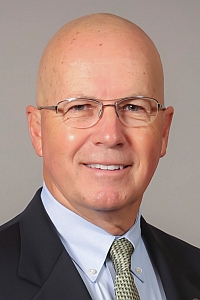
Terry Norris, executive director, Georgia Sheriffs’ Association
ATLANTA – Any proposals to do away with Georgia’s citizen’s arrest law should distinguish between an arrest made by a civilian and a citizen’s right to detain a criminal suspect, the head of the Georgia Sheriffs’ Association said Thursday.
“We don’t need [citizens] to do the job for us,” Terry Norris told members of a legislative committee holding hearings on whether to reform or repeal the state’s citizen’s arrest law. “But they are the eyes and ears of every law enforcement officer.”
The General Assembly passed a hate-crimes bill late last month, and Gov. Brian Kemp signed it three days later.
But with time running out on the 2020 legislative session, lawmakers did not take up other criminal justice reform measures introduced after the February shooting death of Ahmaud Arbery, a 25-year-old Black man gunned down while jogging near Brunswick. Three white men, including a father and son, have been charged with murder.
The House Judiciary Non-Civil Committee opened hearings last week into one of those subsequent proposals, legislation to repeal Georgia’s citizen’s arrest law.
Georgia Rep. Carl Gilliard, D-Garden City, called the Arbery case a “citizen’s arrest gone wrong.”
“The eyes of the nation are on Georgia,” Gilliard told the committee Thursday during its second hearing on the citizen’s arrest issue. “What we have here is an opportunity to send a message to the world that Georgia has no tolerance for people taking the law into their own hands and taking lives.”
“The criminal legal system in Georgia does not rely on private citizens having police powers,” added Mazie Lynn Causey, a lobbyist for the Georgia Association of Criminal Defense Lawyers. “[Citizen’s arrests] allow due process to be jettisoned in order to let private citizens assume the role of enforcer, prosecutor and judge.”
The idea of reforming or repealing the citizen’s arrest law drew support Thursday from Georgia’s law enforcement community.
Pete Skandalakis, executive director of the Prosecuting Attorneys’ Council of Georgia, said he never came across an incident involving a citizen’s arrest in 32 years as a prosecutor.
“I don’t think prosecutors would object to repealing it,” he said.
Norris, executive director of the sheriffs’ association, said he doesn’t believe the law enforcement community and the bill’s supporters are far apart on how to approach the citizen’s arrest law.
But he said citizens must retain the right to detain someone they see committing a crime in order to protect lives and property.
Norris said any citizen who detains a suspect must notify law enforcement authorities immediately and must not be allowed to transport a suspect.
Skandalakis and Causey agreed that situations involving a suspect trying to rob a retail store or break into a citizen’s home or car are covered in other sections of the state’s legal code and have nothing to do with the citizen’s arrest law.
But committee Vice Chairman Bert Reeves, R-Marietta, said he’d like the committee to consider legislation that would clarify the rights of shopkeepers and homeowners to detain a criminal suspect.
“Every major retail store out there has so much invested in their loss-prevention program … in dealing with retail shoplifters,” he said.
Reeves said clarifying the right to detain a suspect would make it a matter of state law rather than leaving it to the subjective judgment of a prosecutor.