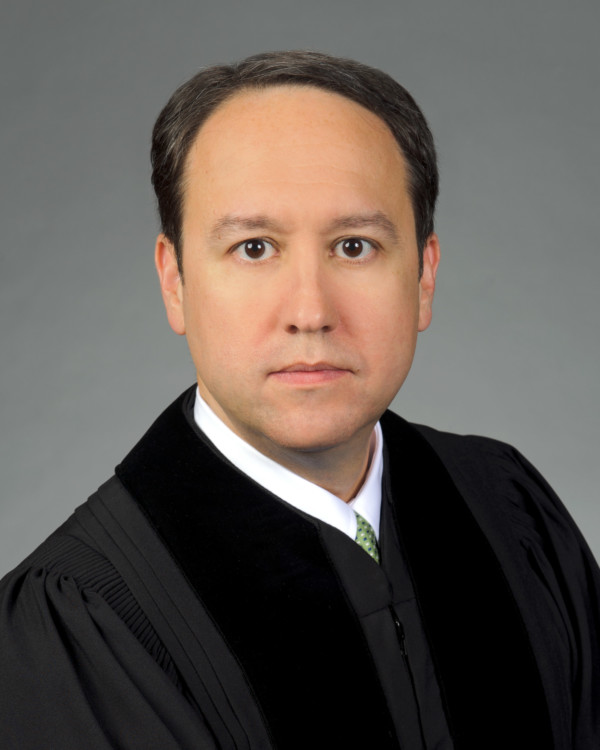
Former Georgia Supreme Court Justice Keith R. Blackwell
ATLANTA – Georgia Supreme Court Justice Keith R. Blackwell has left the bench to rejoin his former law firm.
Blackwell, who retired from the court on Wednesday, will join Atlanta-based Alston & Bird LLP in January as senior counsel of the firm’s Litigation & Trial Practice Group. He began his career there in 2000.
“Justice Blackwell is a judge’s judge,” said Richard Hays, Alston & Bird’s chairman and managing partner. “He is a superbly talented and devoted jurist whose consummate high standards, impartiality and judicial temperament left a lasting mark on the court and the state. He will be a strong voice and advocate for our clients.”
Blackwell was appointed to the state Supreme Court by then-Gov. Nathan Deal in 2012. Before that, he served for two years on the Georgia Court of Appeals.
Before becoming a judge, Blackwell worked as an assistant district attorney in Cobb County and as a deputy special attorney general.
Blackwell wrote more than 400 published opinion during his time on the bench. He also served as the Supreme Court’s liaison to the State Bar of Georgia, the Board of Bar Examiners and the Board to Determine the Fitness of Bar Applicants.
“Justice Blackwell brings a remarkably broad and distinguished body of judicial experience to our firm and our clients,” said Jim Grant, co-leader of Alston & Bird’s Litigation Practice. “His 10 years on the bench handling thousands of appeals, plus his experience as a former prosecutor and attorney in private practice, make him an extraordinary resource and advocate for our clients in complex appellate and litigation matters in state courts around the country.”
Blackwell is a graduate of the University of Georgia School of Law, graduating summa cum laude as first honor graduate.
ATLANTA – The Georgia Water Coalition’s annual Dirty Dozen report highlights a combination of broad concerns over pollution of the state’s rivers, streams and groundwater and threats posed by specific projects.
The report, released Tuesday, also includes items that have appeared previously on the list and remain unaddressed as well as newly identified issues.
Topping the seven returning concerns are a coal ash pond at Georgia Power’s Plant Scherer that residents of nearby Juliette say is polluting their drinking water, pollution of the Altamaha River from the Rayonier Advanced Materials chemical pulp mill in Jesup, a proposed titanium mine adjacent to the Okefenokee Swamp and Spaceport Camden, a proposed rocket launching facility in Camden County opposed by property owners on nearby Little Cumberland Island as a safety hazard.
Another issue back on the coalition’s list not tied to a specific project is the Right to Farm Act, which drew opposition in the General Assembly this year from environmental advocates who argued it would make it easier for large animal-waste generating livestock operations to locate in Georgia. While the bill failed to make it through the legislature this year, supporters are vowing to reintroduce it in 2021.
New items that made the list include the discharge of untreated sewage in the Chattahoochee River in Columbus within a popular whitewater paddling run, a proposed landfill that has drawn opposition in Brantley County and a proposed $20 million development within the floodplain of Little Lotts Creek near downtown Statesboro.
One past item from the list was addressed this month when Georgia voters overwhelmingly approved a constitutional amendment prohibiting the diversion of tax money from environmental trust funds that are supposed to be used to clean up hazardous waste sites and illegal tire dumps.
“That amendment is the first step in keeping millions of dollars dedicated to their intended purposes, and we hope we never spend ink on that issue in this report again,” said Jesse Demonbreun-Chapman, executive director of the Coosa River Basin Initiative in Rome.
“This is our tenth annual report, and the goal each year is to correct these issues so that they’ll never be considered for the Dirty Dozen again.”
ATLANTA – Manufacturers that use the cancer-causing chemical ethylene oxide could face additional restrictions in Georgia under legislation pre-filed in the state House of Representatives.
House Bill 3 would require facilities seeking a permit to release more than 50 pounds of ethylene oxide annually to let the Georgia Environmental Protection Division (EPD) install electronic devices to continuously monitor those emissions and release the findings at least twice a year.
Ethylene oxide is used primarily to sterilize medical equipment, a need that has drawn a great deal of attention during the coronavirus pandemic.
The need for tighter regulation of the chemical became apparent last winter after public concerns were raised over unreported releases at a Sterigenics plant in Smyrna and a facility in Covington operated by BD Bard.
The General Assembly responded during this year’s legislative session by passing a bill introduced in the state Senate requiring manufacturers that use ethylene oxide to report any waste spills or gas releases to the EPD within 24 hours. The director of the EPD then must post the information on the agency’s website.
“We made progress during the previous legislative session to report ethylene oxide spills through Senate Bill 426,” said Rep. Erick Allen, D-Smyrna, sponsor of House Bill 3. “I hope that the state legislature will act swiftly to help monitor emitting patterns and help prevent the risks that threaten our communities.”
Allen’s bill also would require manufacturers releasing ethylene oxide to submit a detailed ambient air plan to the EPD by January 2022.
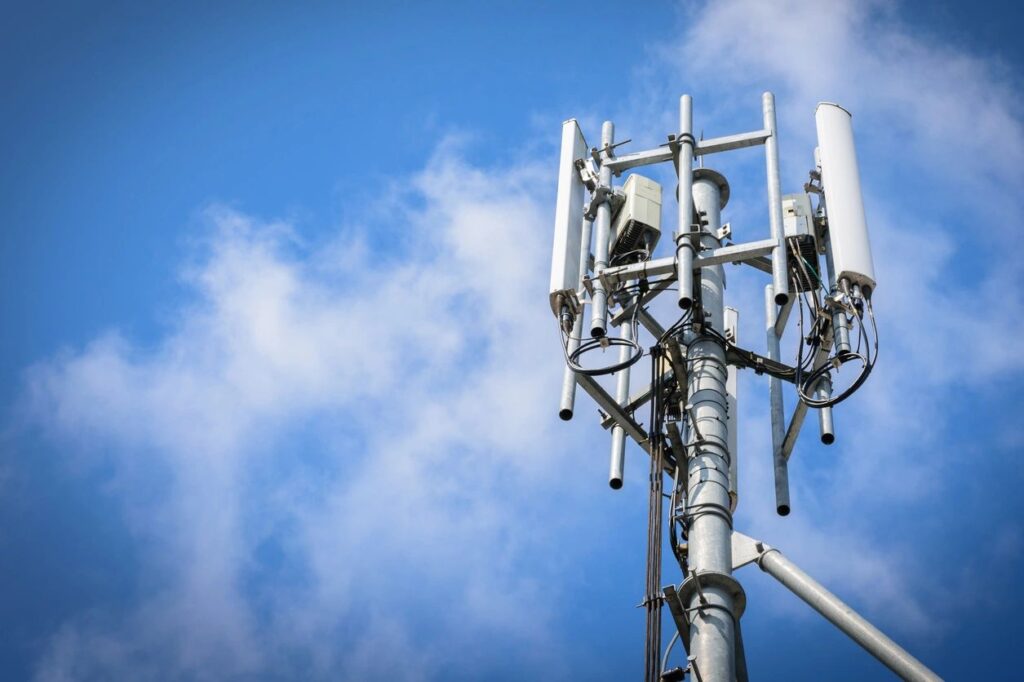
ATLANTA – Georgia’s electric membership cooperatives (EMCs) and telecom providers remain far apart on how to expand broadband connectivity in rural Georgia with time growing short for the state to decide a key component of the issue.
The EMCs want the Georgia Public Service Commission (PSC) to nearly double what they can charge providers to attach broadband technology to their utility poles, from the current $20 per pole per year on average to $37.95, while the providers are calling for rates to be lowered to $7 per pole, the rate set by the Federal Communications Commission (FCC).
Under legislation the General Assembly passed this year, the PSC will decide how much the EMCs can charge for pole attachments.
As the commission opened what is expected to be several days of hearings on Tuesday, representatives of the two sides defended the pole rate they are seeking as critical to the successful deployment of broadband across wide swaths of rural Georgia lacking high-speed internet connectivity.
The rate the EMCs are seeking is fair based on the cost to the utilities of the additional investment they will have to make, Chris Stevens, president and CEO of Coweta-Fayette EMC, told commissioners. Requiring EMCs to charge a lower rate would force them to choose between raising customer rates or reducing their budgets at the risk of service and safety, he said.
“If EMCs aren’t permitted to recover a fair rate for our pole attachments, these [broadband] deployments may not exist,” he said.
Stevens presented an offer the EMCs are proposing to incentivize providers by charging just $1 per pole per year for pole attachments in areas where EMC customers currently lack broadband service.
“We want our member-owners to have access to broadband,” he said.
But lawyers for telecom providers who cross-examined Stevens Tuesday argued that nearly doubling the pole attachment rate in areas that don’t qualify for the $1 discount would give the EMCs a revenue windfall.
Mari Browne, representing the Georgia Cable Association, disputed the EMCs’ assertion that lowering pole attachment rates would force the utilities to raise customers’ monthly bills. She pointed to past instances where the EMCs increased pole attachment rates without lowering customers’ bills accordingly.
“Changes in pole rents … don’t impact service rates,” Browne said.
Browne went on to assert that a federal law adopted in 1978 requires the FCC to set pole attachment rates, and many states have adopted the FCC formula.
But Stevens said the lower pole attachment rates set by the FCC are no guarantee that utilities will aggressively expand broadband service. Even though Georgia Power, for example, charges the FCC rate, 43% of its rural service area is without broadband connectivity, he said.
“Our revenue stream would go up,” said Stevens, referring to the proposed $37.95 rate for pole attachments. “But it would be a true, fair return on the investment our members have made.”
The PSC will hear additional witnesses representing the EMCs and the telecoms during the coming days. The commission is due to vote on the pole attachment rates in mid-December.
ATLANTA – Supporters say the first legislation pre-filed in advance of the 2021 General Assembly session would strike a blow for free speech on Georgia college campuses.
But opponents say the “Forming Open and Robust University Minds (FORUM) Act” could lead to discrimination.
House Bill 1, pre-filed on Monday by Georgia Rep. Josh Bonner, R-Fayetteville, reintroduces a bill the state Senate’s Republican majority passed last March 32-21 along party lines. The legislation cleared a committee in the House of Representatives but failed to get a floor vote during the final hectic week of the 2020 General Assembly session in June.
The FORUM Act would bar the practice of establishing “speech zones” effectively limiting where student groups could convene on campuses. It also would eliminate speech codes in state law by protecting what students can say and protect students’ right to free association for the expression of ideas.
“Our public universities are meant to be safe forums where ideas could be debated, but over the years, the ability of students to exercise their First Amendment rights has been greatly diminished,” Bonner said Monday. “The FORUM Act would help protect and clarify those rights and hold our government accountable if they are suppressed.
“By implementing constitutional standards on free expression, schools can minimize the risk of costly litigation and create an environment where free speech and academic inquiry can thrive.”
Bonner cited specific complaints that prompted him to introduce the bill.
In 2016, Georgia Gwinnett College officials reportedly stopped a student from sharing his Christian faith with other students on his college campus, Bonner said.
Georgia Tech’s student government reportedly denied funding for a Students for Life speaking event featuring Alveda King, the niece of civil rights activist Martin Luther King, Jr., because her appearance would have been “inherently religious,” Bonner said.
Several Democratic senators objected to this year’s bill during the floor debate over concerns it could prevent colleges from barring organizations that promote race and gender discrimination. They also worried such broad speech protections could attract hate groups to Georgia campuses.
The Senate bill also drew opposition from representatives of the University System of Georgia and the American Civil Liberties Union.