ATLANTA – Atlanta-based The Home Depot Inc. has agreed to pay a $20.75 million fine for violating federal environmental rules for conducting home renovations involving lead paint.
A consent decree filed Thursday in U.S. District Court for the Northern District of Georgia requires the giant hardware retailer to implement a corporate-wide program to ensure that the contractors it hires are certified and trained to avoid spreading lead dust and paint chips during home renovation projects.
The fine is the highest civil penalty ever obtained for a settlement under the federal Toxic Substances Control Act.
“Today’s settlement will significantly reduce children’s exposure to lead paint hazards,”said Susan Bodine, assistant administrator for the U.S. Environmental Protection Agency’s Office of Enforcement and Environmental Compliance.
“Home Depot will implement system-wide changes to ensure that contractors who perform work in homes constructed before 1978 are EPA-certified and follow lead-safe practices. EPA expects all renovation companies to ensure their contractors follow these critical laws that protect public health.”
“These were serious violations,” added Jonathan D. Brightbill, principal deputy assistant attorney general of the Justice Department’s Environmental and Natural Resources Division. “The stiff penalty Home Depot will pay reflects the importance of using certified firms and contractors in older home renovations.”
EPA discovered the alleged violations while investigating customer complaints about Home Depot renovations in five states that showed Home Depot subcontracted work to firms that in some cases did not use lead-safe work practices.
The agency then conducted a comprehensive review of Home Depot’s records of renovations performed throughout the country and found hundreds of instances in which the company sent uncertified firms to perform renovations that required certified and trained firms.
EPA also discovered cases where Home Depot failed to provide compliance documentation showing that specific contractors had been certified by EPA, were properly trained, and had used lead-safe work practices in home projects.
In the proposed consent decree, Home Depot also agreed to provide information about following lead-safe work practices to its professional and do-it-yourself customers in its stores, on its website, on YouTube, and in workshops.
“The Home Depot is committed to lead safety and safe work practices for our associates, partners and customers,” according to a statement Home Depot released Thursday. “That’s why the company expects all installers to not only do a great job, but also safely complete their work while following the required protocols and legal requirements including lead safety.”
Use of residential lead-based paint was banned in 1978 but still remains in many older homes and apartments across the country. Lead-dust hazards can occur when lead paint deteriorates or is disrupted during home renovation and remodeling activities.
Exposure to lead-based paint can cause a variety of health problems, from behavioral disorders and learning disabilities to seizures and death, putting young children at the greatest risk because their nervous systems are still developing.
The states of Utah, Massachusetts, and Rhode Island joined the federal government in the consent decree, which is subject to a 30-day public comment period and final court approval.
ATLANTA – First-time unemployment claims in Georgia were down significantly last month, even as the state’s jobless rate rose.
Initial unemployment claims fell by 92,491 in November from the previous month to 104,175, a 47% drop, the Georgia Department of Labor reported Thursday. At the same time, the state’s unemployment rate increased by 1.2% to 5.7%.
The rise in the jobless rate was due to a dramatic increase in Georgia’s workforce, which hit a record high of 5.17 million last month, state Commissioner of Labor Mark Butler said.
“The fact that our labor force is at an all-time high in the midst of a crippling pandemic is pretty remarkable,” Butler said. “While many focus on the unemployment rate increasing, what is more important is the increases in jobs and employment.”
The number of employed Georgians increased by 12,759 in November to 4.87 million, while the number of jobs grew by 20,900 last month to nearly 4.52 million.
The labor department has paid out nearly $16.5 billion in state and federal unemployment benefits to nearly 4.16 million Georgians since the coronavirus pandemic took hold in the state back in mid-March, more than the last nine years combined.
During the week ending Dec. 12, the job sector accounting for the most initial unemployment claims was accommodation and food services with 6,267 claims. The administrative and support services sector was next with 2,672 claims, followed by health care and social assistance with 2,337.
Of more than 162,000 jobs currently listed on the website EmployGeorgia, more than half advertise annual salaries above $40,000.
Resources for reemployment assistance along with information on filing an unemployment claim can be found on the labor department’s webpage at dol.georgia.gov.
ATLANTA – The New York-based Open Space Institute (OSI) Wednesday announced its fourth acquisition of undeveloped land in southeastern Georgia.
The nearly 2,500-acre Wayne County Conservation property is adjacent to more than 1,600 acres the OSI acquired and transferred to the Georgia Department of Natural Resources (DNR) last year.
The new acquisition, made through a discounted sale and transfer by Southern Power, brings the public-private Gopher Tortoise Conservation Initiative to more than 80% of its goal of preserving enough pristine acreage to keep the gopher tortoise from being listed under the Endangered Species Act.
“The Open Space Institute is proud to have protected this amazing property for Georgia’s state reptile, the gopher tortoise, and the incredible array of other species that call this land home,” said Maria Whitehead, OSI’s senior project director. “I thank Southern Power for their incredible generosity in selling this property at a significantly discounted price to make the permanent protection of the land a reality.”
In addition to gopher tortoises, two other high priority species have been identified on the Wayne County Conservation property: the federally threatened eastern indigo snake and the federally endangered hairy rattleweed, a critically imperiled species that has shown significant population declines over the last 30 years.
“The hairy rattleweed is … found only in Brantley and Wayne counties, and this will become one of three conserved populations,” said Jason Lee of the DNR. “In addition, there is a viable population of the gopher tortoise, Georgia’s imperiled state reptile, on the property. The permanent protection of the site will contribute significantly to the recovery goals for both species.”
In the coming years, OSI plans to sell the Wayne County Conservation property to the DNR as a strategic addition to the adjacent OSI-protected property.
The OSI also has been involved in preserving two other undeveloped coastal properties: Cabin Bluff and the Ceylon tract.
The Georgia Board of Natural Resources voted this month to acquire 4,420 acres of the Ceylon tract from the OSI and The Conservation Fund. Board members signed off in October on the acquisition of nearly 8,000 acres of the Cabin Bluff property from the OSI and The Nature Conservancy.
Both properties are slated to become state wildlife management areas.
ATLANTA – Georgia’s two U.S. Senate races are too close to call heading into the final three weeks before the Jan. 5 runoffs, according to a new poll from Insider Advantage and Atlanta’s Fox 5.
The poll of 500 likely Georgia voters, conducted Monday by telephone, found Republican U.S. Sen. David Perdue holding a slight lead over Democratic challenger Jon Ossoff, 49.0% to 47.8%.
In the other contest, GOP Sen. Kelly Loeffler held a similarly narrow advantage over Democrat Raphael Warnock, 49.2% to 48.0%.
In both cases, the difference between the two candidates was well within the poll’s 4.4% margin of error.
“The Republican candidates have found their footing,” said Matt Towery, chairman of Insider Advantage and a former Republican state legislator. “However, that footing is tenuous, given that turnout in absentee ballots cast and early voting thus far has shown a high level of African American voter participation.”
Offsetting that is the huge lead Perdue and Loeffler enjoy among white voters, at 68.4% for both candidates. African-American voters heavily prefer Warnock, the pastor at Atlanta’s Ebenezer Baptist Church, at 82.2%, and Ossoff, who polled 79.6% of Black voters.
Independent voters, who used to lean Republican in Georgia, are going for the Democrats, according to the poll. Warnock has the support of 62.9% of the survey respondents, with Ossoff at 55.7%.
Men prefer Loeffler and Perdue, with the Republican incumbents garnering the support of 55.2% and 53.2% of the male vote, respectively. Women went the other way, backing Ossoff with 54.6% of their vote and Warnock polling 53.7% among female voters.
Broken down by age, the strongest support for the Republicans comes from voters 65 or over, with 56.7% for Loeffler and 56.4% for Perdue. Warnock and Ossoff polled highest among voters ages 18 through 39, with Warnock at 50.0% support among those younger voters and Ossoff at 48.7%.
“[Perdue and Loeffler] need to up those [senior voter] numbers to feel comfortable about a potential win in January,” Towery said. “Meanwhile, Ossoff and Warnock must cut into the 15% share of the African American vote that the two Republicans currently enjoy. That number usually slips below 10% for most Republicans by Election Day.”
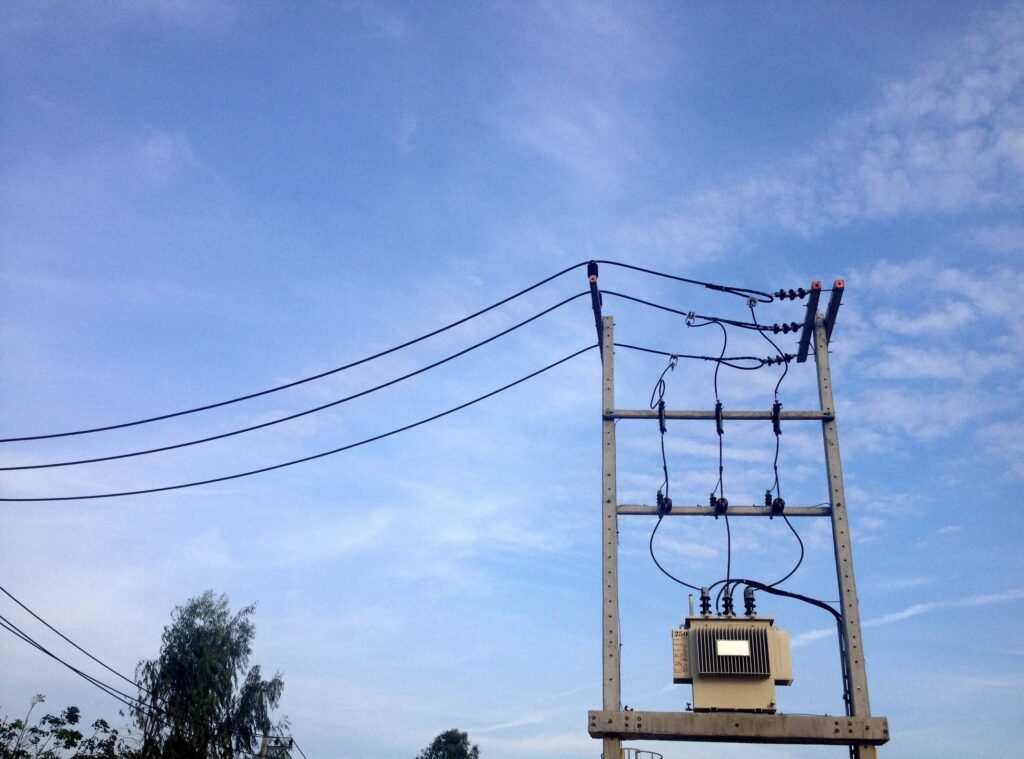
ATLANTA – Georgia utility regulators Tuesday approved an offer by electric membership cooperatives (EMCs) to provide steep discounts to telecom providers that expand broadband service into rural areas of the state unserved by broadband.
But a resolution the state Public Service Commission (PSC) adopted unanimously also will increase fees the EMCs are allowed to charge providers for attaching broadband technology to utility poles in areas already served by broadband.
Tuesday’s unanimous vote follows through on legislation the General Assembly passed last June assigning the PSC to set pole attachment rates for the EMCs. The purpose of House Bill 244 is to encourage the extension of broadband into parts of rural Georgia on the wrong side of the “digital divide,” making it difficult to attract jobs and – in the coronavirus era – offer online classes to students stuck at home.
Under the resolution, EMCs will charge telecom providers just $1 per year for new pole attachments in areas without broadband service for the next six years, effective July 1. The EMCs proposed the “One Buck Deal” in October.
“With today’s vote, the Georgia PSC is giving broadband providers access to utility infrastructure at a cost of next-to-nothing in the locations where Georgia needs broadband the most,” said Dennis Chastain, president and CEO of Georgia EMC, the trade association that represents the state’s 41 EMCs. “With today’s decision, EMCs are poised and ready to partner with broadband providers across the state to help them expand into our rural service territories.”
But telecom providers cried foul at another provision in the resolution that will force them to pay $27.71 per pole per year for broadband attachments in areas already served by broadband. That’s less than a fee of $34.72 proposed at the beginning of Tuesday’s PSC meeting by Commissioner Tim Echols but more than the $20 per pole providers now pay on average.
In a written statement, the Georgia Cable Association argued that raising the rates for pole attachments in served areas of Georgia would go against the intent of House Bill 244 to expand broadband availability in rural communities.
“Failing to set reasonable pole attachment rates, terms and conditions will increase the overall cost of broadband deployment, and discourage tens of millions of dollars in private investment,” the statement read. “That’s a disappointment for every Georgia community that needs access to broadband.”
The cable association went on to raise the possibility that telecom providers will react to the PSC vote by taking their broadband investments to other Southern states with “more attractive pole attachment policies.”
Commissioner Tricia Pridemore, who amended Echols’ original motion to propose the $27.71 rate, said it is based on the cost to the EMCs of attaching and maintaining broadband attachments to their poles.
Commission Chairman Chuck Eaton also amended Echols’ original motion to require the PSC to review the rates every two years to determine whether they’re accomplishing the goal of expanding broadband service in rural Georgia.
“The General Assembly did charge us with this,” Eaton said. “I need to be able to look them in the eye and tell them what we’ve done will expand rural broadband.”
Commissioner Jason Shaw, who represents largely rural South Georgia on the PSC, said the issue is personal for him.
“As someone who lives in unserved rural Georgia … I see, first hand, children who must travel long distances to find sufficient WiFi just to finish their homework,” he said. “I hope providers will take advantage of this $1 deal to push broadband into rural areas.”