ATLANTA – The two committees in the General Assembly in charge of drawing new congressional and legislative district lines this year have set the schedule for 10 remaining town hall hearings across Georgia.
The House Legislative & Congressional Reapportionment Committee and the Senate Reapportionment and Redistricting Committee held the first hearing on Tuesday at the state Capitol.
Here is the remaining schedule of hearings:
Monday, June 28: Atlanta
Tuesday, June 29: Cumming
Wednesday, June 30: Dalton
Tuesday, July 6: Athens
Wednesday, July 7: Augusta
Monday, July 26: Brunswick
Tuesday, July 27: Albany
Wednesday, July 28: Columbus
Thursday, July 29: Macon
Friday, July 30: Virtual only
All of the hearings will run from 5 p.m. until 7 p.m. Locations will be announced later.
The General Assembly draws new congressional and legislative district boundaries every 10 years following the latest U.S. census to account for population shifts that have occurred during the previous decade.
Districts must be as close to equal in population as possible, although legislative districts get a little more leeway in that regard than congressional districts. Lawmakers will draw boundaries for 14 U.S. House districts, 180 state House districts and 56 Georgia Senate districts.
The General Assembly expects to receive the full range of census data lawmakers will use to govern the process by the end of September. Gov. Brian Kemp then will schedule a special session sometime this fall for the legislature to draw and approve the maps.
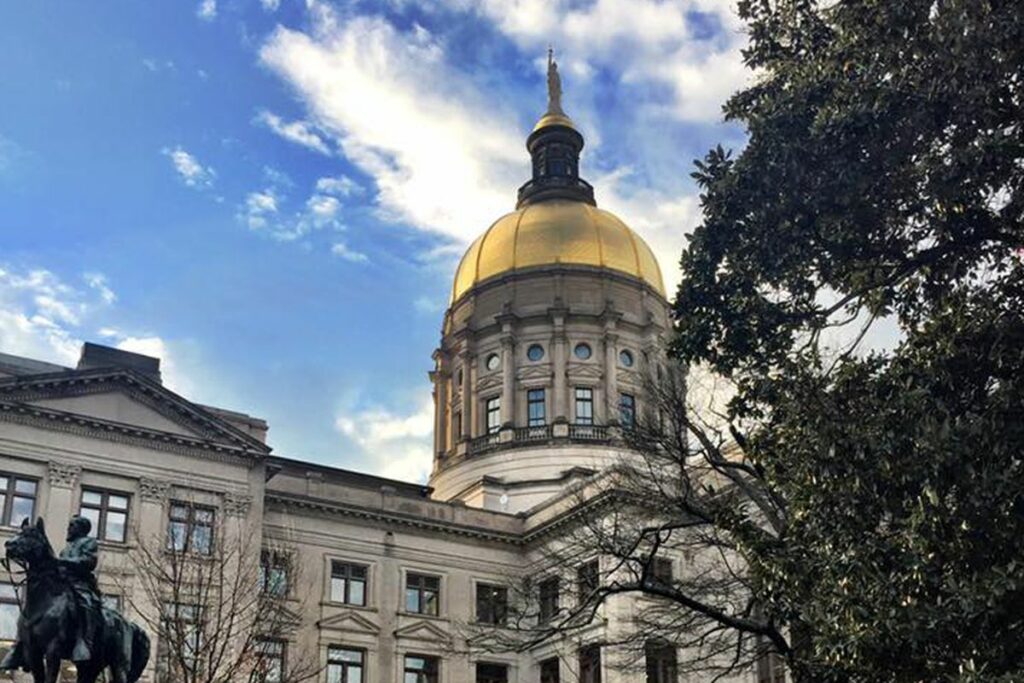
The Georgia Capitol building in Atlanta (Photo by Beau Evans)
ATLANTA – The Georgia House and Senate committees in charge of drawing new congressional and legislative district lines this year heard an earful Tuesday from activists calling for fairness in a process that is typically highly partisan.
“As communities become more diverse, it is critical that district maps reflect that,” Michelle Zuluaga of the group Latinos for Democracy, told lawmakers during the first of 11 public hearings to be held across the state this summer and fall. “We want maps that will unite our state, not divide our communities.”
The General Assembly draws new district boundaries every 10 years following the latest U.S. census to reflect population shifts that have occurred during the last decade. While redistricting usually takes place during the late summer or early fall, the process isn’t expected until later in the fall because the COVID-19 pandemic has delayed the release of census data.
In Georgia, the party in control of the legislature historically has drawn maps giving it the best chance to maintain or build on its majorities. Democrats were in charge of redistricting through 2001, but in 2011 and again this year, Republicans are in the driver’s seat.
Lawmakers will approve new maps for Georgia’s 14 U.S. House districts, 180 state House districts and 56 Georgia Senate districts.
During Tuesday’s virtual hearing, several speakers argued that Georgia should take power over redistricting away from the General Assembly and put it in the hands of an independent commission, as has been done in some other states.
But more complained that the process thus far is lacking transparency and, as a result, isn’t giving Georgia citizens an adequate opportunity for input.
“It is crucial to a fair and functioning democracy that the process not cut out public participation,” Rebecca DeHart, CEO of the nonprofit Fair Count, said during a news conference before the hearing sponsored by a coalition of progressive groups and fair districting advocates.
State Senate Minority Leader Gloria Butler noted that Georgia has experienced significant demographic shifts since the 2011 redistricting, including a 40% increase in its Asian-American population, a 26% rise in Latinos and a 14% increase in the Black population.
“These maps must reflect the changing face of Georgia and the need for historically disenfranchised voters to have a voice,” said Butler, D-Stone Mountain.
Sen. John Kennedy, R-Macon, chairman of the Senate Reapportionment and Redistricting Committee, promised to keep the lines of communication open.
“We are committed to an open, redistricting process,” he said. “We want to hear from everyone.”
Rep. Bonnie Rich, R-Suwanee, chairman of the House Legislative & Congressional Reapportionment Committee, announced that future hearings will be held in Atlanta, Albany, Augusta, Athens, Brunswick, Columbus, Cumming, Dalton and Macon.
ATLANTA – The diminishing number of Georgians with landline telephones in their homes are about to see a savings on their bills thanks to the sunsetting of a decade-old program.
The Georgia Public Service Commission (PSC) voted unanimously Tuesday to reduce the fee supporting the program from 6% to 3.75% in monthly phone bills starting next month.
The mandatory fee, implemented in 2011, was designed to bring the costs of in-state long-distance phone calls in line with the costs of out-of-state long distance. It took 10 years to fully implement the program, making the fee reduction possible.
“The bottom line is business and individual customers in Georgia will see a savings on their phone bills,” said Commissioner Tricia Pridemore, who chairs the PSC’s Telecommunications Committee. “This is welcome news for anyone with a landline phone.”
A $50 phone bill will drop by slightly more than $1 per month under the reduced fee, resulting in more than $13 in annual savings. Georgia has an estimated 1.7 million landline phones.
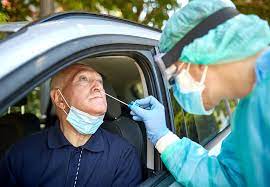
ATLANTA – With COVID-19 vaccinations lagging in Georgia, a newly formed coalition launched an initiative Tuesday to convince unvaccinated Georgians to get tested for the virus.
Forty organizations make up ACT Against COVID – the Alliance for Comprehensive Testing – including the Georgia AFL-CIO, the Georgia Municipal Association, 100 Black Men of Atlanta, local elected officials and public health professionals.
“In order to safely and responsibly reopen our communities, we need to continue to emphasize the importance of testing,” said Vince Williams, mayor of Union City, a small city in southern Fulton County. “Things are looking up, but we can’t let down our guard yet.”
Georgia’s COVID-19 vaccination rate is among the lowest in the nation with only 35% of Georgians fully vaccinated, according to the state Department of Public Health. As a result, testing remains an essential tool for reducing transmission of the virus.
“Our doctors care for a diverse population, including refugees who have settled in the Clarkston area over the past few decades,” said Dr. Gulshan Harjee, co-founder of the Clarkston Community Health Center in DeKalb County.
“These communities have been disproportionately impacted by COVID-19, and implementing testing programs to identify where the virus is spreading will help us keep the infection rate under control.”
With vaccine hesitancy remaining high not only in Georgia but across the country, ACT Against COVID is being rolled out nationwide through a partnership with Quest Diagnostics, a Secaucus, N.J.-based clinical laboratory.
“2021 provides an opportunity for individuals to emerge from the pandemic and take back control of their health,” said Dr. Jay Wohlgemuth, Quest Diagnostics’ chief medical officer.
“COVID-19 has shone a light on the need for ongoing engagement in the health-care system. That includes preventive care, chronic care management and managing the spread of COVID-19.”
COVID tests are still readily available at urgent care centers, pharmacies, primary-care physician offices, health clinics and some local government offices.
ATLANTA – School districts across Georgia are preparing to reopen their classrooms to full-time in-person learning this fall with the help of more than $4 billion in federal funding.
The $1.9 trillion American Rescue Plan that President Joe Biden signed in March includes $122 billion in economic relief to help public schools shut down by the coronavirus pandemic reopen safely.
Local school superintendents from metro Atlanta made a commitment Monday to fully reopen their classrooms when school starts in August during a news conference with U.S. Sen. Jon Ossoff, D-Ga.
“This has been a really, really tough time for parents who have had to deal with partial school closures, for educators who have had to adapt to the realities of this pandemic, most of all for your people who over this past year didn’t get the kind of experiences because of the public health crisis that we wanted to make sure we could offer them,” Ossoff said.
Ossoff said the legislation gives local school systems broad discretion over how they plan to use the stimulus money.
Clayton County School Superintendent Morcease Beasley, who hosted the news conference, said parents made it clear they wanted their children to get back into their classrooms as soon as possible.
“These funds we’re receiving today are going to allow us to provide opportunities for our students not only to learn content they may have missed over this pandemic but to ensure that they have social experiences that will add value to their lives,” he said.
The federal funds are going to school districts around the state primarily based on their student populations. Here is a breakdown of the top-10 recipients: