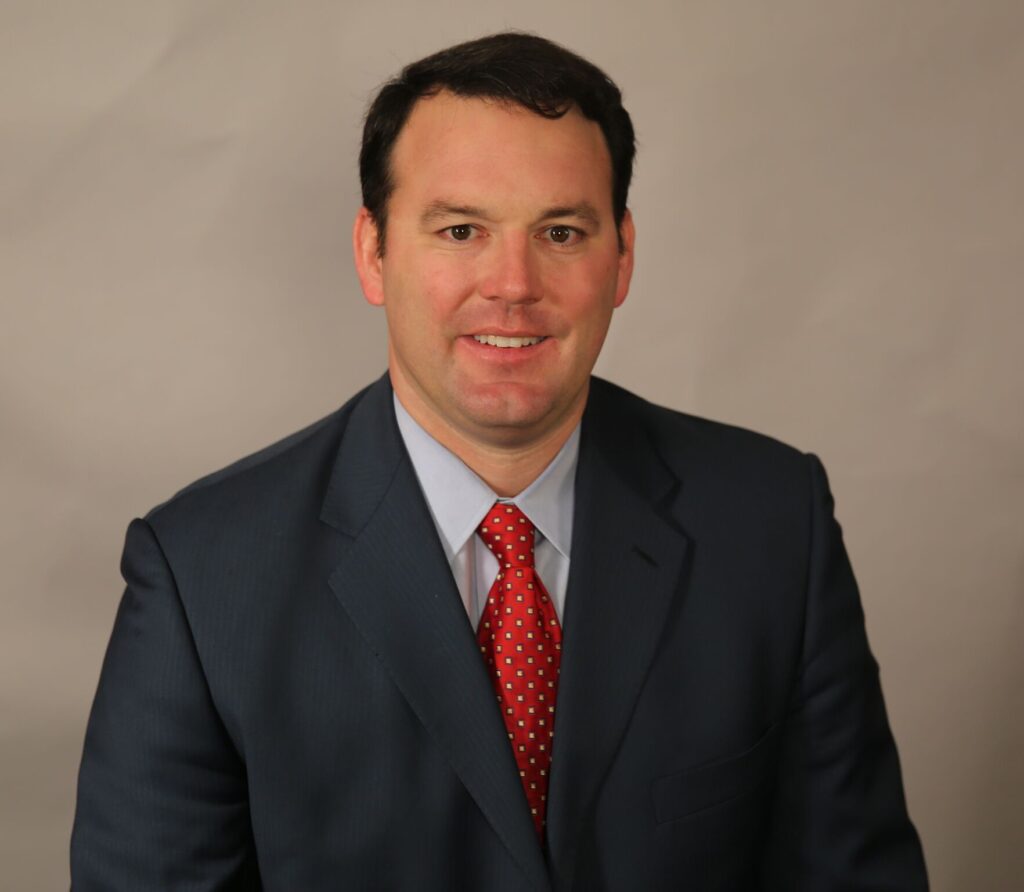
ATLANTA – State Sen. Burt Jones has become the third candidate to enter next year’s Republican race for lieutenant governor.
Jones, R-Jackson, who runs an insurance business, filed paperwork Friday to seek the post being vacated by GOP Lt. Gov. Geoff Duncan, who announced in May he would not run for a second term.
“Georgians deserve a proven business leader, consistent conservative, and champion for Georgia families with the courage to stand up and make our state a better place, and I’m running for lieutenant governor to do just that,” Jones said Tuesday in officially launching his candidacy.
“I’ll fight for the future of every Georgian by creating high-quality jobs and cutting taxes, reining in the cost of higher education and investing in more educational opportunities for our children, strengthening election integrity and restoring voter confidence, and standing with our men and women of law enforcement to keep our communities safe.”
Jones has been a key player during the last couple of years in the fight to legalize sports betting in Georgia, serving as chief sponsor of sports betting legislation introduced in the Senate last year.
More recently, he was among a group of Senate Republicans who asked Gov. Brian Kemp to call a special session of the General Assembly shortly after the November elections to consider changes to Georgia’s election laws.
The same group conducted hearings inside the state Capitol in December that lent ammunition to claims of election fraud spread by then-President Donald Trump and his allies, which were subsequently dismissed in the courts.
Jones, an early supporter of Trump in Georgia, and the other senators subsequently released a report calling the Nov. 3 election “chaotic” and that “any reported results must be viewed as untrustworthy.”
In January, Jones was stripped of a committee chairmanship by Duncan, who repeatedly pushed for the group to drop its election fraud claims and accept the election results as legitimate.
Senate President Pro Tempore Butch Miller, R-Gainesville, a Duncan ally, declared his candidacy for lieutenant governor in May and has gotten a head start on fundraising. Miller raised more than $2 million during the five weeks between entering the contest and the June 30 second-quarter reporting deadline.
The third candidate in the race is Republican activist Jeanne Seaver of Savannah. She had raised $17,432 through the end of June, according to a report filed with the Georgia Government Transparency & Campaign Finance Commission.
ATLANTA – The new state fiscal year began last month with a slight increase in tax collections, the Georgia Department of Revenue reported Friday.
The revenue agency brought in $2.16 billion in taxes in July, up just 0.4% compared to July of last year.
The slight increase resulted from a large hike in sales tax revenue coupled with a somewhat smaller decrease in individual and corporate income taxes.
With Georgia businesses much more active last month than a year ago – when the economic impact of the coronavirus pandemic was more severe – net sales tax revenue in July increased by 17.2% over July 2020.
Individual income tax collections, however, fell by 9.1% last month. While income tax refunds soared by 293.8% in July, that was partially offset by a 246% increase in tax payments.
Corporate income tax receipts also fell in July by 24.9%, driven largely by a 115.5% increase in corporate tax refunds.
Georgia’s motor fuel tax collections rose by 6.4% last month compared to July 2020, reflecting a rebound in car and truck traffic to pre-pandemic levels.
ATLANTA – The Biden administration Friday completed a weeklong push for a nearly $1 trillion infrastructure bill now before the U.S. Senate with the appearance of a third Cabinet official in metro Atlanta.
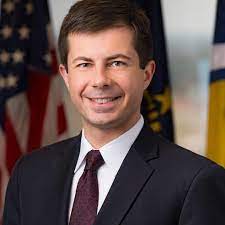
Transportation Secretary Pete Buttigieg toured the Curiosity Lab, a testing space for innovative automotive technology in Peachtree Corners, then stopped by the MARTA rail station in Doraville.
“We see here how state and local partners, public and private, already are working to create our transportation future,” Buttigieg said at the Curiosity Lab. “It’s time for the federal government to step up, too.”
The infrastructure bill includes $550 billion in new spending. The rest consists of previously approved funding.
Of the new spending, $110 billion would go toward roads and bridges, $66 billion would be spent on passenger and freight rail, $65 billion would be used to expand broadband service, and $55 billion would go toward water and sewer projects with a goal of eliminating lead pipes.
Another $39.2 billion would go to public transit systems including about $1.5 billion for MARTA and other transit agencies in Georgia, while $7.5 billion would be used for electric vehicle infrastructure including charging stations. Georgia’s share for charging stations would be about $135 million.
“Georgia plays a big role in the deployment of electric vehicles,” said state Commissioner of Transportation Russell McMurry.
McMurry cited the two EV battery manufacturing plants South Korea-based SK Innovation is building in Jackson County and the Blue Bird plant in Fort Valley that produces electric school buses.
Buttigieg said the money in the infrastructure bill going to advance the electric vehicle industry would both create American jobs and help combat climate change.
“The movement of the automotive industry toward electric is inevitable, but having it based in America is not,” he said. “This is our chance to demonstrate the old false choice of climate versus jobs will be broken in the 2020s. We have an opportunity to capture that EV future in America.”
The Senate was working through a series of proposed amendments to the infrastructure bill Friday and could vote on it as early as Saturday. While the measure enjoys significant support among Senate Republicans, it could run into trouble if and when it reaches the U.S. House of Representatives.
House Speaker Nancy Pelosi, D-Calif., is threatening to block the measure until the Senate takes up a larger $3.5 trillion bill providing funding for the nation’s “human” infrastructure needs, including education, child care and health care. The larger measure lacks Republican support.
To bolster the infrastructure bill’s chances, Health and Human Services Secretary Xavier Becerra and Treasury Secretary Janet Yellen made stops in metro Atlanta earlier this week.
ATLANTA – When the coronavirus pandemic struck Georgia in March of last year, Georgia’s colleges and universities suddenly had to switch to online instruction to protect students and teachers from the virus.
Now, the University System of Georgia is applying the lessons learned from that experience to establish the state’s first all-online four-year degree programs.
Valdosta State University is launching an E-degree pilot project this month that will offer eight undergraduate degrees in subjects ranging from criminal justice to general business to elementary education.
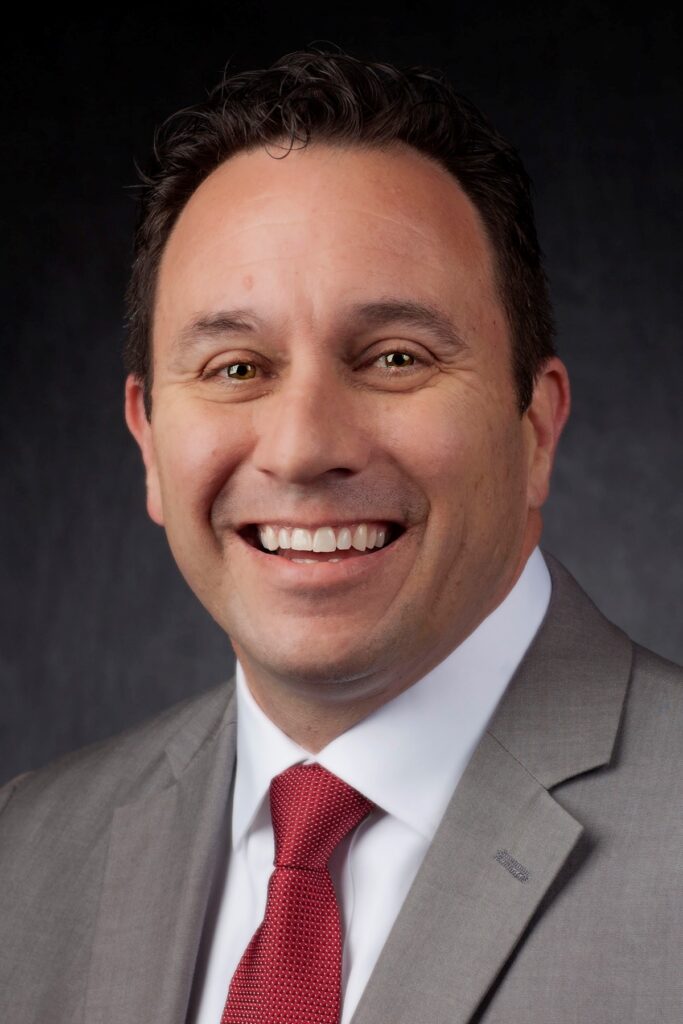
“We were always fearful some courses couldn’t be taught online,” said Rodney Carr, vice president for student success at Valdosta State and director of the school’s new Online College for Career Advancement.
“[But] we learned that’s not always the case. Some of these courses, even a lab science, could be done online. We just had to figure out how.”
Carr said the degree programs that were chosen for the pilot tend to attract non-traditional college students, a group the project is targeting.
“We designed this around the person who’s returning to school,” he said. “It’s for non-traditional students who either haven’t started college because something got in the way after high school or who need a credential to advance their career.”
Mary Tucker falls into the latter category. The Valdosta native graduated from Valdosta State in 2007 and entered the financial services workforce, first in Jacksonville, Fla., and later in Alexandria, Va., just outside of Washington, D.C.
Tucker said she decided she wanted to get a job in the federal government and felt she needed additional education to accomplish that goal.
She started looking around Northern Virginia for universities offering the courses she wanted that could fit into her full-time work schedule. It was then that she came across information on the new Valdosta State E-degree program and decided to sign up for an online degree in organizational leadership.
“I was pretty nervous,” Tucker said. “My first degree was all in the physical classroom.”
Anticipating that sense of uncertainty among students unfamiliar with how an all-online degree program would work, Valdosta State has created “concierge coaches,” faculty and staff volunteers who check with students periodically on how they’re doing and what additional assistance they might need.
Carr said the school has signed up 295 concierge coaches, with each taking responsibility for 10 to 15 students.
Tucker said having a concierge coach has been helpful.
“She made me feel a lot more comfortable with the process,” Tucker said. “It was like having my own one-on-one person to make sure I succeed.”
Tuition for the new E-degree program has been set at $299 per credit hour, in the mid-price range among University System of Georgia institutions and less than the courses offered online by the private for-profit University of Phoenix and Southern New Hampshire University.
Carr said the program doesn’t charge students for books or other materials.
“We looked at every barrier we thought exists out there and how we could tackle that barrier,” he said.
To avoid overwhelming students holding down jobs, the courses are taught just two at a time in eight-week increments.
Carr said the program is starting off with about 120 students, with a goal of increasing that to 300 to 400 by the end of the 2021-22 academic year.
“We’ve only done a little bit of marketing,” he said. “We’re starting to ramp that up some.”
Carr said the pilot project is making a four-year commitment. After that, it will be evaluated by the university system Board of Regents.
“The goal is to get people to walk across the stage and get to the finish line,” he said. “If we’re enrolling students and meeting their needs, that’s what success looks like.”
ATLANTA – Gov. Brian Kemp Friday defended his decision not to impose mask-wearing or vaccination mandates on Georgians to stem the latest surge in coronavirus cases, hospitalizations and deaths.
“I don’t believe we need to have a dictatorship in government telling what local school systems need to do, what private businesses need to do, what nonprofits need to do, or what individuals should do,” Kemp said during an appearance at Ball Ground Elementary School in Cherokee County to mark the start of a new school year. “Individuals need to make the best decision they can.”
Kemp said Georgians seem to be getting the message about the need to be vaccinated against COVID-19. He said vaccinations in Georgia have risen 66% since cases of the virus began to increase in recent weeks with the spread of the highly contagious delta variant.
“People who haven’t been vaccinated are realizing the delta variant spreads more rapidly, and they’re looking into getting vaccinated,” he said.
Kemp said his decision not to impose a statewide mask mandate in Georgia schools is driven by his philosophy of local control.
“We’re doing the same thing we did last year,” he said. “We’re trusting the local school systems, the local boards, to work with their parents, work with their administrations, to make good decisions for each individual school.
“Every school is different. They’re different neighborhoods, different counties. They’re rural. They’re suburban. They’re urban. … I’m confident our schools can make decisions at the local level.”
School districts have been doing just that, with some imposing mask mandates for students and teachers and others leaving it up to the individual.
Kemp has been facing pressures from both sides of the political aisle on the masking issue. Some Republicans have urged him to prohibit school systems from imposing mask mandates on their own, while some Democrats have called for a statewide mask requirement in the schools.
On Friday, Kemp urged the Biden administration to move forward with formal Food and Drug Administration approval of the COVID-19 vaccines.
“The vaccine is still under emergency authorization,” the governor said. “A lot of people won’t take the vaccine because of that.”
In keeping with the education theme of his appearance at an elementary school, Kemp strongly hinted he will follow through next year with the final installment of a $5,000 teacher pay raise he pledged on the campaign trail three years ago.
In 2019, the General Assembly approved a $3,000 pay hike. Then this year, teachers got another $1,000 in the form of a one-time bonus.
Heading into the 2022 legislative session this winter, the state is sitting on a large budget surplus.
“I have not forgotten the promise,” Kemp said, referring to his campaign promise of a $5,000 teacher pay raise. “We’re looking forward to working with the General Assembly on that issue.”