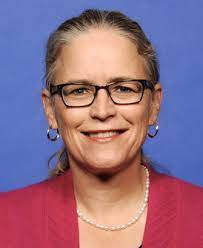
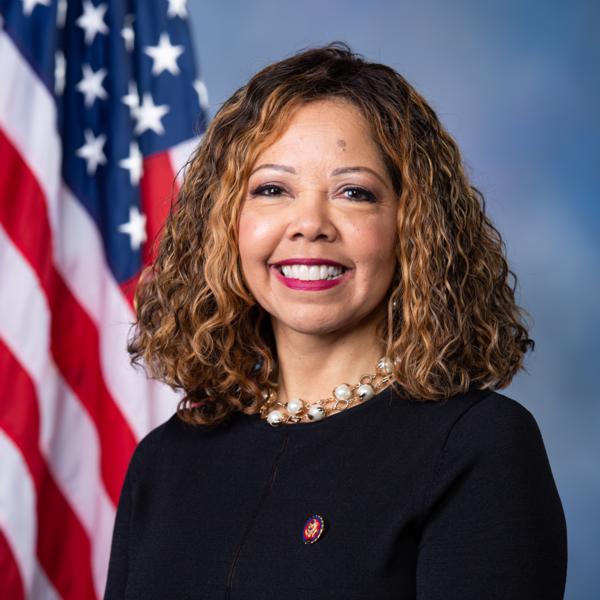
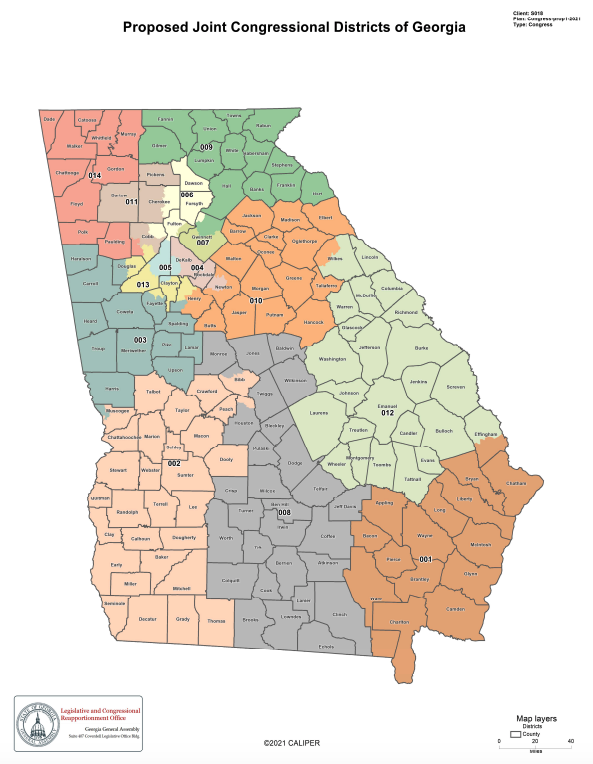
ATLANTA – U.S. Rep. Carolyn Bourdeaux began building her case for reelection Tuesday, one day after passage of a new congressional redistricting map put her on a collision course with fellow Democratic Rep. Lucy McBath.
Bourdeaux, D-Suwanee, announced endorsements from 16 elected officials from Gwinnett County – primarily Democrats – to return for a second term representing Georgia’s 7th Congressional District, which lies mostly inside Gwinnett.
McBath, D-Marietta, jumped into the 7th District race on Monday after the Republican-controlled state House of Representatives adopted a new congressional map that moves much of her current 6th District into heavily Republican Forsyth, Dawson and Cherokee counties.
Bourdeaux picked up endorsements from two Gwinnett County commissioners, three state representatives, five mayors, and six city council members. Gwinnett County makes up 87% of the newly redrawn 7th District and includes about 60% of Bourdeaux’s current constituents.
“I am proud to have the support of so many local leaders,” Bourdeaux said. “Each of them knows what it’s like to be responsible for their community — to be the one out front.
“They have trusted me to help them keep the promises they made to their constituents. I have worked tirelessly to help each of them and they know they can count on me in Washington.”
“What I appreciate most about Congresswoman Bourdeaux is her dedication to the community … whether it’s supporting President Biden’s infrastructure plan, advocating for the equitable redevelopment of Gwinnett Place Mall or securing funding for our local trailway system,” added state Rep. Beth Moore, D-Peachtree Corners, who is leaving the House to run for a newly created state Senate seat in western Gwinnett County. “Her hard work has earned her another term.”
Bourdeaux was elected to Congress last year, defeating Republican Dr. Rich McCormick to win an open seat.
Despite the incumbent’s familiarity with the 7th District, McBath didn’t hesitate to get into the race. She declared on Monday that she was not going to allow Republicans to dictate when it’s time for her to leave office.
This story is available through a news partnership with Capitol Beat News Service, a project of the Georgia Press Educational Foundation.
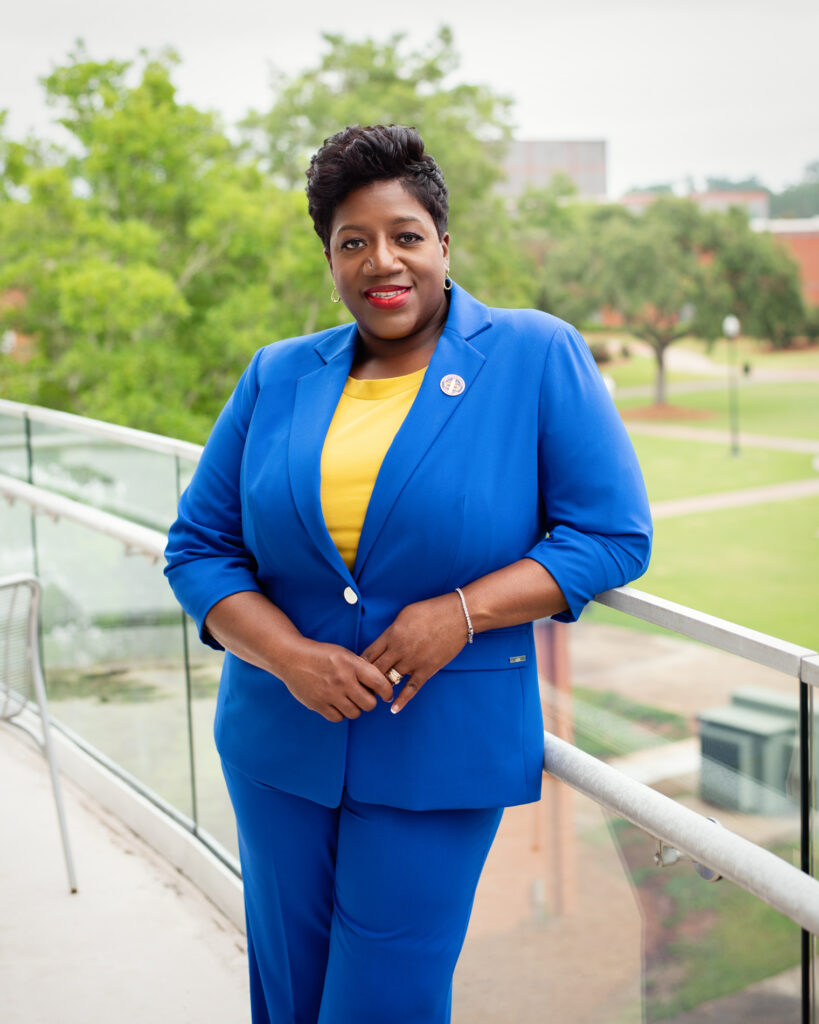
Albany State University President Marion Fedrick chaired an advisory group that considered renaming University System of Georgia buildings and colleges.
ATLANTA – The University System of Georgia has decided not to pursue plans to rename dozens of buildings and colleges named for historical figures associated with racism.
The board voted Monday not to accept the recommendations of an advisory board headed by Albany State University President Marion Fedrick formed in June of last year to explore the issue.
“The intent of the advisory group was to better understand the names that mark our buildings and colleges, recognizing there would likely be a number of individuals who engaged in behaviors or held beliefs that do not reflect or represent our values today,” the regents wrote in a joint statement. .
“We acknowledge, understand and respect there are many viewpoints on this matter. Going forward, the board is committed to naming actions that reflect the strength and energy of Georgia’s diversity.”
The advisory committee was formed weeks after George Floyd, a Black man, was murdered in Minneapolis by a white police officer, which touched off street protests across the country.
A national wave of removals of statues honoring Confederate political and military leaders also served as a backdrop to reexamining the names of university buildings and colleges, including the Grady School of Journalism at the University of Georgia, named for late-19th century journalist and segregationist Henry Grady.
“The University System of Georgia is majority minority – 54% of our students identify as non-white, representing the strength and diversity of this state,” said Regent Sarah-Elizabeth Langford of Atlanta.
“In a university system tasked with educating the leaders of tomorrow, we must support the students of today and create an inclusive environment for learning. This is incredibly important as the board works to ensure future namings reflect the strength of Georgia’s diverse communities.”
Although the board opted not to move forward with the renamings, the advisory committee’s work was valuable, said Regent Don Waters of Savannah.
“I believe it is important for students and the system to know and understand the history on our campuses and in our communities as we work together to build a better future,” he said. “History is a great teacher, and we and our institutions can learn much from this effort.”
This story is available through a news partnership with Capitol Beat News Service, a project of the Georgia Press Educational Foundation.
ATLANTA – Georgia Gov. Brian Kemp joined Republican chief executives from 14 other states Monday in an initiative suggesting potential solutions to the global supply chain issues to President Joe Biden.
The launch of Operation Open Roads coincided with a roundtable on the issue Kemp convened at the state Capitol with private and public sector logistics experts.
In a chain letter to the president dated Monday, the governors chided the Biden administration for gumming up the free flow of commerce with increased regulations and rulemaking, including imposing a COVID vaccine mandate on private businesses.
“Disruptions due to supply shortage increased 638% during the first half of 2021 for essential products, including semiconductor chips, plastics and cardboard,” the letter stated. “The delay of shipping vessels arriving to North American ports from Asia has ballooned from 14 hours in June 2020 to 13 days in September 2021.
“Supermarkets are receiving approximately 40% of what they order compared to pre-pandemic fulfillments of 90%. Approximately 40% of U.S. shipping containers pass through West Coast ports that sit in a logjam, and yet our East Coast ports remain open for business.”
During the roundtable, Kemp cited steps to expand cargo capacity at the Port of Savannah and other strategies Georgia has undertaken to ease the supply chain crisis including streamlining the licensing process for commercial truck drivers.
After the discussion, Kemp suggested the federal government work with states to lower the eligibility age for commercial truck drivers from 21 to 18, eliminate or suspend taxes that create financial disincentives for the logistics industry and suspend the federal vaccine mandate on businesses he said is contributing to workforce shortages.
A federal appeals in Louisiana blocked the vaccine mandate two weeks ago by issuing an emergency stay.
Biden announced last month that the private operators of the ports of Los Angeles and Long Beach had agreed to begin working 24 hours a day, seven days a week to reduce the backlog of cargo waiting at those ports and offshore for anchorage space.
The president also has defended his vaccine mandate as a temporary measure to keep America’s workers safe.
Governors from the following states joined Georgia in the Operation Open Roads initiative: Tennessee, Arizona, Florida, Idaho, Iowa, Maryland, Missouri, Montana, Nebraska, North Dakota, Ohio, Oklahoma, South Carolina and Texas.
This story is available through a news partnership with Capitol Beat News Service, a project of the Georgia Press Educational Foundation.
ATLANTA – U.S. Rep. Lucy McBath wasted little time Monday announcing a change of plans after Republicans in the Georgia House gave final passage to a new congressional map that would likely flip her 6th Congressional District to the GOP.
Within an hour of the virtually party line vote in the General Assembly, McBath, D-Marietta announced she will run in the newly redrawn and much more Democrat-friendly 7th District next year.
The move potentially sets up a primary showdown with fellow Democratic Rep. Carolyn Bourdeaux of Suwanee, who won that Gwinnett County-based seat last year.
“It is no mystery why Republicans and the NRA (National Rifle Assocation) have decided I’m their top target,” said McBath, who was elected in 2018 on an anti-gun platform after her teenage son was shot to death.
“As a Black woman, activist, and mother on a mission—they would like nothing more than to stop me from speaking truth to power about the gun lobby and Republican Party in Congress. So let me make something very clear: I refuse to stand down.”
The new congressional map drawn by the Republican-controlled legislature changes the 6th from a racially diverse competitive district including East Cobb, North Fulton and North DeKalb counties to a predominantly white, more rural district by extending its boundaries north through all of Forsyth and Dawson counties and eastern Cherokee County. Former President Donald Trump carried the district as newly redrawn by 26 points over President Joe Biden.
On the other hand, changes to the 7th District increased its minority voting-age population to 67%.
Bourdeaux is expected to run for reelection to the 7th District seat, even though the new map draws her into the staunchly conservative, heavily Republican 9th district in Northeast Georgia. Federal law allows members of the U.S. House to live outside of the districts they represent.
Bourdeaux picked up a key supporter during the weekend when former Atlanta Mayor and Congressman Andrew Young endorsed her reelection bid. Young already had endorsed Bourdeaux more than a year ago, but the renewed stamp of approval is timely considering the new congressional map.
Bourdeaux, who is white, has taken some criticism from progressive Democrats for taking moderate positions in the House, notably in pushing for a vote on Biden’s $1.2 trillion infrastructure bill before the House voted on the Build Back Better social spending legislation that remains pending in the U.S. Senate.
However, her position was vindicated when the House eventually did pass the infrastructure bill ahead of the Build Back Better bill. Bourdeaux emerged from the intra-party dispute as a major backer of the kinds of transportation improvements vital to traffic-choked Gwinnett County.
On Monday, McBath aimed her fire at Gov. Brian Kemp, his fellow Republicans and the gun lobby.
“Simply put, I will not let Brian Kemp, the NRA, and the Republican Party decide when my work in Congress on behalf of my son is done,” she said. “Black women are often expected to stand down and step aside, and those are two things I simply refuse to do.”
This story is available through a news partnership with Capitol Beat News Service, a project of the Georgia Press Educational Foundation.
Georgia’s new congressional map is expected to give Republicans a 9-5 majority in the state’s U.S. House delegation.
ATLANTA – The Republican-controlled state House of Representatives approved a new congressional map Monday, the final act in a once-a-decade redistricting special session.
House members voted 96-68 virtually along party lines after Democrats complained Republicans drew a map that targeted a Black woman incumbent and spread minority voters thin in order to retain a GOP majority in Georgia’s congressional delegation through the end of this decade.
“This map puts power over principle, partisanship over people,” said House Minority Leader James Beverly, D-Macon.
Legislative Democrats proposed a congressional map that likely would have led to a 7-7 split in the delegation, which they argued would reflect the 50-50 partisan divide that has arisen in Georgia as a result of minority population growth since the last census in 2010.
Instead, the new map is expected to pave the way for Republicans to gain one seat on their current 8-6 majority for a 9-5 advantage.
To accomplish that, the map looks likely to re-flip the 6th Congressional District Democratic U.S. Rep. Lucy McBath of Marietta – who is Black – won in 2018 after it had been in GOP hands for decades. The district, currently concentrated in ethnically diverse suburban East Cobb, North Fulton and North DeKalb counties, now stretches into more exurban and even rural communities in predominantly white Forsyth, Dawson and eastern Cherokee counties
“We should not be drawing maps that target women incumbents,” said Rep. Miriam Paris, D-Macon. “This congressional map does just that.”
Rep. Bonnie Rich, R-Suwanee, chairman of the House Legislative & Congressional Reapportionment Committee, bristled at the Democrats’ accusations of targeting. She said it’s necessary to move voters out of districts that have grown larger than the 755,000 legally required for even distribution and shift voters into other districts that are underpopulated.
“We don’t draw maps to protect incumbents,” she said. “We draw maps for the people.”
The other specific complaint Democrats raised Monday was over Republicans adding voters from heavily Black South Cobb County to the largely white, rural Northwest Georgia district represented by conservative firebrand Congresswoman Marjorie Taylor Greene, R-Rome.
But House Minority Leader David Wilkerson, D-Powder Springs, said there’s more to the issue than Greene, including the map splitting Cobb between four congressional districts, and dividing South Cobb alone three ways.
“This is not about Marjorie Taylor Greene or whoever else represents the district,” he said. “It’s about fairness.”
But House Speaker David Ralston said the decision to extend the 14th District to the south was not politically motivated.
“That district needed to pick up about 36,000 people,” said Ralston, R-Blue Ridge. “We had to go somewhere and find them. … That’s a challenge.”
Democrats are expected to file lawsuits challenging the congressional map and well as new Georgia House and Senate maps lawmakers adopted earlier in the special session.
Ralston said he’s confident the maps will be upheld.
“The maps – the rhetoric notwithstanding – are fair. They follow the law and the Voting Rights Act,” he said. “I was very proud of the process and the work that went into this.”
This story is available through a news partnership with Capitol Beat News Service, a project of the Georgia Press Educational Foundation.